Before Your Baby Could Crawl, You'd Already Spent More Than Your Parents Made in Three Months
When Babies Came Without Business Plans
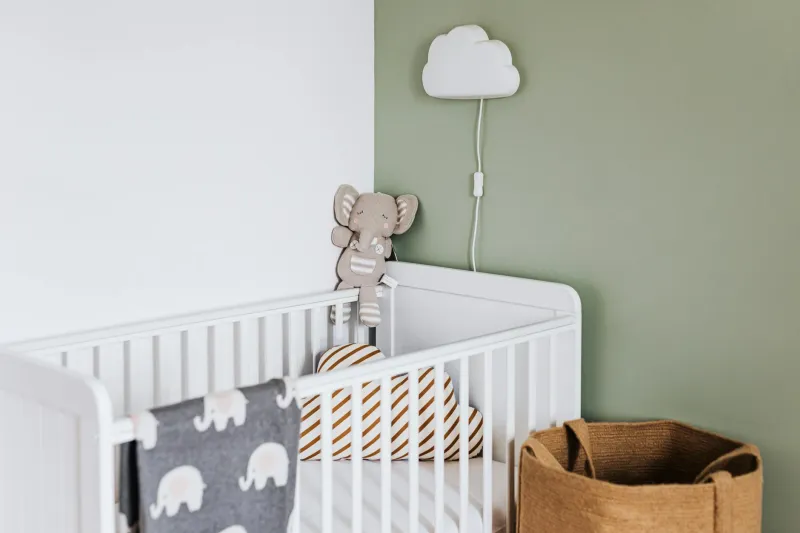
Susan Miller brought her daughter home from the hospital in 1973 to a nursery that cost exactly $47. The crib came from her sister-in-law, the changing table was her husband's old desk with a towel on top, and the mobile was something she'd made from construction paper and fishing line during her eighth month of pregnancy.
Today, that same nursery would run closer to $4,700. And that's before you factor in the stroller that costs more than Susan's first car, the baby monitor system that rivals NASA's communication setup, or the organic cotton onesies that somehow require a monthly subscription.
We've turned the first year of human life into America's most expensive hobby.
The Great Baby Registry Revolution
In 1975, a baby registry was a handwritten list your mother kept in her kitchen drawer. It usually included practical items: diapers, bottles, a few receiving blankets, and maybe a high chair if you were lucky. The total value rarely exceeded $200, and half the items were hand-me-downs that had already seen three babies through their first years.
Fast-forward to today, and baby registries read like shopping lists for small dictators. The average registry now tops $2,500, featuring items that previous generations never knew existed: wipe warmers, bottle sterilizers, sound machines that play seventeen different types of white noise, and swaddles that promise to solve sleep problems that somehow weren't problems when babies just wore their father's old t-shirts.
Target reports that their average baby registry has grown 340% in value since 1990, even after adjusting for inflation. We're not just buying more things for babies — we're buying entirely different categories of things.
When Formula Came in One Flavor: Baby
Walk down the baby formula aisle in 1978, and you'd find three options: regular, soy-based, or the store brand that was exactly the same as regular but cost thirty cents less. Parents grabbed whichever was on sale and called it a day.
Today's formula aisle spans forty feet and requires a advanced degree in nutritional science to navigate. There's formula for sensitive stomachs, formula for brain development, formula that promises to boost immunity, and formula that costs more per ounce than premium gasoline. The average family now spends $1,500 on formula in the first year — compared to $200 in 1978 dollars.
The kicker? Pediatric nutritionists will tell you that the basic nutritional content hasn't changed much. We're paying premium prices for premium anxiety.
The Stroller That Costs More Than College Tuition
In 1974, a stroller was a metal frame with wheels and a fabric seat. It folded up, it rolled forward, and it kept your baby off the ground. Price: $23, or about $140 in today's money.
The modern stroller market reads like a luxury car catalog. There are all-terrain models with shock absorption systems, travel systems that convert into car seats and high chairs, and jogging strollers built with the same materials as professional racing equipment. The top-tier models now exceed $1,200 — for something that will be obsolete when your child turns three.
Bugaboo, the Dutch company that turned strollers into status symbols, didn't even exist until 1999. Now they dominate sidewalks in major cities, where pushing anything less than a $800 transport system marks you as either broke or hopelessly out of touch.
The Fear Economy of First-Time Parenting
Behind every $300 baby monitor and $150 organic sleep sack lies the same driving force: we've convinced parents that loving their child means spending money on their child, and that spending more money means loving them more.
Social media amplified this anxiety into a full-time performance. Instagram feeds overflow with perfectly curated nurseries, artfully arranged baby gear, and mothers who somehow look runway-ready while dealing with diaper blowouts. The pressure to document and display your parenting choices has turned every baby purchase into a public statement about your values, your income, and your commitment to your child's future.
Companies have gotten incredibly sophisticated at targeting new parents during their most vulnerable moments. Facebook's algorithm knows you're pregnant before your mother does, and the targeted ads begin immediately: products you never knew you needed, solving problems you didn't know existed, all promising to make you a better parent.
What We Lost in the Upgrade
The economics are staggering, but the cultural shift runs deeper. When babies required less stuff, they required more community. Neighbors shared cribs, mothers passed along clothes, and experienced parents taught new ones how to navigate those first overwhelming months.
Today's parents often face those challenges alone, armed with Amazon Prime and a credit card instead of a support network. We've replaced communal knowledge with consumer products, and the result is both more expensive and more isolating.
The average American family now spends $13,000 in their baby's first year — not including childcare or medical costs. In 1975, that figure was closer to $2,500 in today's dollars.
The Price of Perfection
Perhaps most telling is what happens to all this expensive baby gear. The $200 high chair gets used for eighteen months. The $400 crib converts to a toddler bed that gets replaced by a twin bed. The $150 baby clothes get worn for eight weeks before the baby outgrows them.
Meanwhile, the babies who grew up with hand-me-down cribs and homemade baby food turned out just fine. They became doctors and teachers and parents themselves, none apparently scarred by their mothers' failure to purchase the optimal sleep training system.
We've confused spending with caring, and the baby industry has been happy to profit from that confusion. The real question isn't whether we can afford to give our children everything — it's whether we can afford to teach them that love comes with a price tag attached.