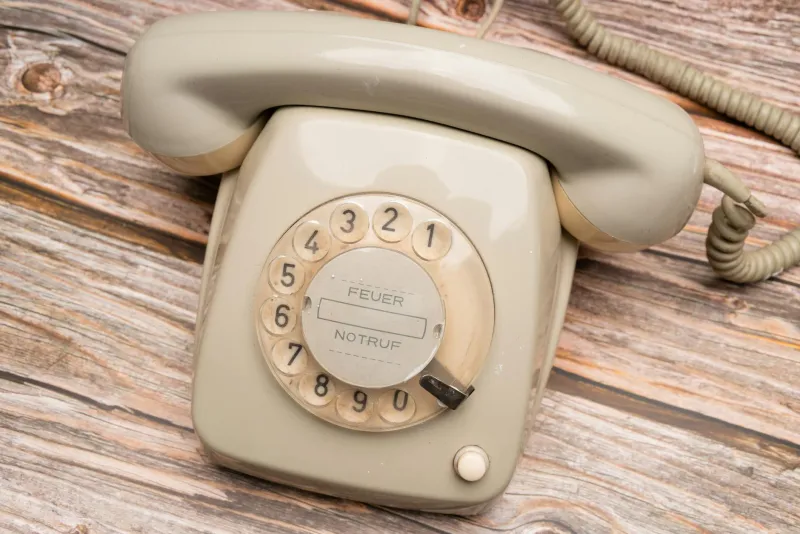
The Mental Rolodex We All Carried
In 1987, Sarah Martinez could rattle off phone numbers like a human directory. Her best friend Jenny: 555-0847. Pizza Palace: 555-PIZZA. Her grandmother in Phoenix: 602-555-9823. Her boyfriend's work line, her dentist's office, the movie theater's showtimes number—all stored in the biological hard drive between her ears.
Sarah wasn't unusual. Most Americans in the pre-smartphone era carried 20 to 30 phone numbers in their heads, some more. It was a basic life skill, like knowing your address or being able to make change. You memorized numbers because you had to. There was no other choice.
Today, Sarah's daughter Emma can barely remember her own cell phone number. Ask her for her best friend's number, and she'll reach for her phone faster than she'd reach for a fire extinguisher. The mental muscle that humans developed over a century of telephone use has atrophied in less than two decades.
When Memory Was Your Only Option
The necessity of memorizing phone numbers created a fascinating cognitive ecosystem. People developed personal systems: rhythm patterns, visual associations, number groups. Some folks turned digits into little songs. Others found patterns—like how 555-0123 rolled off the tongue easier than 555-7849.
Party lines in rural areas meant you had to remember not just the number, but the specific ring pattern that meant the call was for your house. Two long rings and a short one? That was the Hendersons. Three quick rings? The Millers were getting a call.
Business cards weren't just networking tools—they were memory aids. People would stare at a card for thirty seconds, repeating the number silently until it stuck. Phone books weren't just reference materials; they were study guides for the numbers you called most often.
The Rituals of Numerical Memory
Remember calling someone for the first time? You'd dial the number while reading it, then immediately hang up and try to dial it again from memory. If you got it wrong, you'd practice until muscle memory kicked in. The physical act of dialing—actually rotating that dial or punching those buttons—reinforced the mental storage.
Answering machines changed the game slightly. Suddenly you could leave your number on someone's machine, but you still had to know it cold. No fumbling around looking for it. The expectation was that any functioning adult could recite their own phone number clearly and quickly.
Kids learned phone numbers the way they learned their ABCs. Parents drilled them: "What's our home number? What's Daddy's work number? What do you dial in an emergency?" Children's songs and rhymes incorporated phone numbers. Educational TV shows taught kids to memorize important numbers as a basic safety skill.
The Smartphone Amnesia Effect
Something profound happened when we outsourced our phone numbers to devices. Cognitive scientists call it "digital amnesia" or "the Google effect"—our brains' tendency to forget information we know we can easily retrieve later. When your phone stores 500 contacts, your brain decides that memorizing any of them isn't worth the effort.
Dr. Merlin Donald, a cognitive scientist at Case Western Reserve University, has studied how external memory tools change human cognition. His research suggests that smartphones haven't just changed how we store information—they've altered how we think about information. We've shifted from a "need to know" culture to a "need to know where to find it" culture.
 Photo: Dr. Merlin Donald, via i.pinimg.com
 Photo: Case Western Reserve University, via benchmarkfurniture.com
The average smartphone user today can actively recall maybe three to five phone numbers: their own (sometimes), their spouse's (maybe), and perhaps one parent. Everything else lives in the contacts list, accessible but not internalized.
What We Lost When Numbers Became External
The death of memorized phone numbers represents more than just a shift in how we store data. It's a fundamental change in how we relate to the people in our lives. When you knew someone's number by heart, you carried a piece of them with you. The act of memorizing created a mental connection that went beyond mere contact information.
There was also a social element to shared number knowledge. Families had "their" numbers that everyone knew. Friend groups would collectively memorize the pizza place, the movie theater, the taxi company. These shared numerical touchstones created micro-communities of knowledge.
Emergency preparedness has suffered too. In 1985, if the power went out and you needed help, you could find a working phone and call your brother, your neighbor, or your boss from memory. Today, if your phone dies during a crisis, you're functionally isolated from everyone except 911.
The Cognitive Trade-Off
Neuroplasticity research shows that our brains adapt to the tools we use. When we stopped memorizing phone numbers, we didn't just lose that specific skill—we reduced our overall capacity for memorization. The mental exercises required to store and recall numerical sequences strengthened cognitive pathways that we use for other types of memory work.
Some researchers argue this isn't entirely negative. The cognitive resources we once devoted to phone number storage are now available for other tasks. We can focus on higher-level thinking instead of rote memorization. But others worry that we're losing fundamental cognitive skills that took millennia to develop.
The Muscle Memory of Connection
Before smartphones, calling someone required intentionality. You had to actively recall their number, dial it correctly, and wait for them to answer. This process created a brief moment of anticipation and focus. You were fully committed to the act of reaching out.
Today, calling someone requires scrolling through a list and tapping a name. The cognitive load is minimal, but so is the intentionality. When contact becomes effortless, it paradoxically becomes less meaningful. We can reach anyone instantly, but we're less likely to reach anyone deliberately.
The Generation That Remembers Numbers
There's now a clear cognitive divide in America. People over 40 can still recall phone numbers from their childhood and young adult years. They remember their college roommate's number, their first apartment's landline, their parents' work extensions. These numbers are fossilized in their memory, preserved from an era when forgetting meant disconnection.
People under 30 often can't remember their own phone number without checking their phone. They've never needed to develop the cognitive habits that made numerical memory automatic. Their brains have been shaped by abundance rather than scarcity of storage.
What We Carry Now Instead
The space in our minds once occupied by phone numbers hasn't remained empty. We've filled it with passwords, WiFi network names, email addresses, and social media handles. We've traded one type of memorized connection for another, though the new connections feel less personal, less permanent.
Some argue that this represents cognitive evolution—adapting our memory to match our tools. Others see it as cognitive devolution—losing basic mental skills that connected us more directly to the people in our lives. The truth probably lies somewhere in between, in the complex space where human adaptation meets technological change.