The Letter You Waited Three Days For Meant Something Different Than the Text You Read in Three Seconds
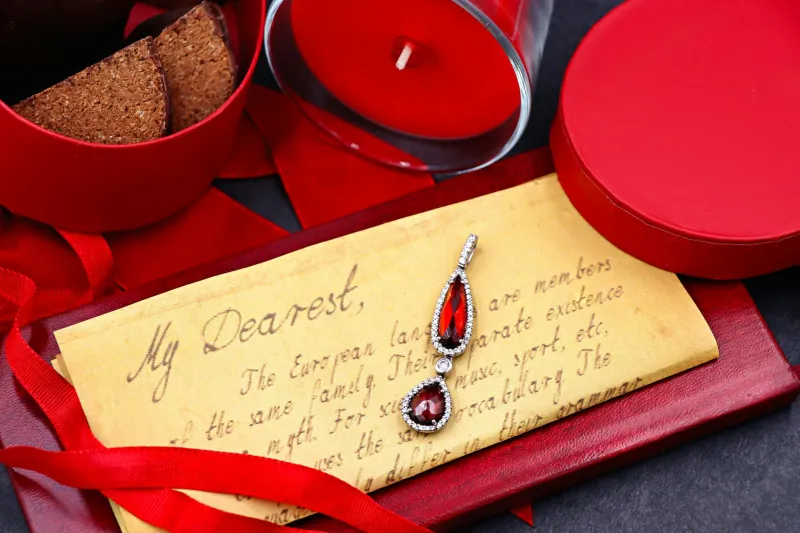
The Letter You Waited Three Days For Meant Something Different Than the Text You Read in Three Seconds
Somewhere in a shoebox in your grandmother's closet, there's probably a stack of letters tied with a rubber band or a piece of ribbon. Thin paper, careful handwriting, a two-cent stamp in the corner. She kept them because they meant something. Not just what they said — but the fact that someone sat down, thought about her specifically, and committed that thought to paper before walking it to the mailbox.
That world is almost entirely gone. And most Americans under 30 have barely noticed.
When the Mailbox Was the Lifeline
For the better part of two centuries, the United States Postal Service wasn't just a convenience — it was the circulatory system of American social life. In the 19th century, letters connected soldiers to their families, immigrants to their home countries, and lovers separated by geography. By the mid-20th century, the daily mail delivery had become a genuine household ritual. You checked it. You waited for it. A letter arriving was an event.
At its peak in the 1970s and 80s, Americans sent billions of pieces of first-class mail every single year. The USPS handled around 106 billion pieces of mail in 2001 alone, and a significant portion of that was personal correspondence — birthday cards, thank-you notes, letters to college friends, notes slipped into care packages. Writing a letter wasn't considered old-fashioned. It was just what you did.
The cost of a first-class stamp hovered around eight cents in 1971. Adjusted for inflation, that's roughly 60 cents today — cheaper than the 68 cents it actually costs now. Postage was never the barrier. Time and intention were the whole point.
What Writing a Letter Actually Required
Here's something worth sitting with: writing a letter forced you to slow down.
You couldn't fire off a quick message and immediately get distracted by something else. You had to think about what you wanted to say before you said it. You had to consider your audience — what would make them laugh, what they'd want to know, what you actually felt. Then you had to physically form each word by hand, which meant every sentence carried a small physical investment.
And once you sealed that envelope, it was gone. No editing, no unsending, no deleting it at 2 a.m. because you changed your mind. Letters were committed acts of communication in a way that almost nothing in our digital lives is.
People kept them. That's the detail that gets overlooked. We saved letters in ways we simply don't save texts. Entire relationships — courtships, friendships, decades of family history — were preserved in handwritten form. Presidential libraries are full of correspondence. So are attics. The written letter created an archive of human connection that text threads, which most of us delete or lose when we switch phones, simply don't replicate.
Then the World Sped Up
Email arrived in the 1990s and changed business correspondence almost overnight. But personal letters hung on a little longer. What really finished them off was the smartphone.
Once you could send a message from anywhere and receive a reply within seconds, the three-day wait of a posted letter started to feel not romantic but absurd. Why would you do that? And honestly, for most practical purposes, the answer is: you wouldn't. Instant communication is genuinely better for coordinating plans, sharing news quickly, and staying in casual daily contact with people across the country.
First-class mail volume has collapsed. The USPS processed around 23 billion pieces of first-class mail in 2023 — less than a quarter of its 2001 peak. The decline isn't a blip. It's a structural shift that shows no signs of reversing.
What Got Left Behind
None of this means texting is bad. But it's worth being honest about what changed.
A text message is frictionless. That's its strength and its weakness. Because there's almost no cost to sending one, there's also almost no weight to receiving one. We send dozens a day without thinking. "Happy birthday 🎂" lands in someone's notifications alongside a work Slack, a promotional email, and a news alert. It registers. It might even feel nice. But it doesn't feel like a letter.
There's also the question of presence. A handwritten letter required the writer to be mentally present — actually thinking about the recipient — for the entire time it took to write. A birthday text can be composed in four seconds while waiting for coffee. The recipient often knows this, even if they'd never say so.
What we traded away was the signal that said: I gave you my time and attention, not just my words.
The Small Revival That Tells You Something
Interestingly, handwritten correspondence hasn't completely died. Stationery sales have quietly grown among younger consumers in the last decade. Greeting card companies still move billions of units annually. The "slow mail" pen pal movement has picked up real traction online, with communities on Reddit and dedicated apps matching strangers who want to exchange actual letters.
People are clearly still drawn to the format. They just have to choose it deliberately now, which means it carries even more weight when someone does.
If you've received a handwritten note recently — a real one, not a printed card — you probably remember it. You might have kept it. That reaction tells you everything about what the format still carries that a text message doesn't.
Then and Now
The first-class stamp isn't quite a relic yet — the post office still exists, and plenty of Americans still use it. But for personal communication, it might as well be. The generation that grew up waiting by the mailbox is aging out, and the generation that grew up with smartphones has no lived memory of what it felt like to unseal an envelope and unfold a letter from someone who missed you.
That's not a tragedy. Progress rarely is. But it's a real change — in how we communicate, in what we preserve, and in how much of ourselves we're willing to slow down long enough to put on paper.
Some things got faster. Some things got lighter. Whether that's the same as better depends on what you think connection is actually for.