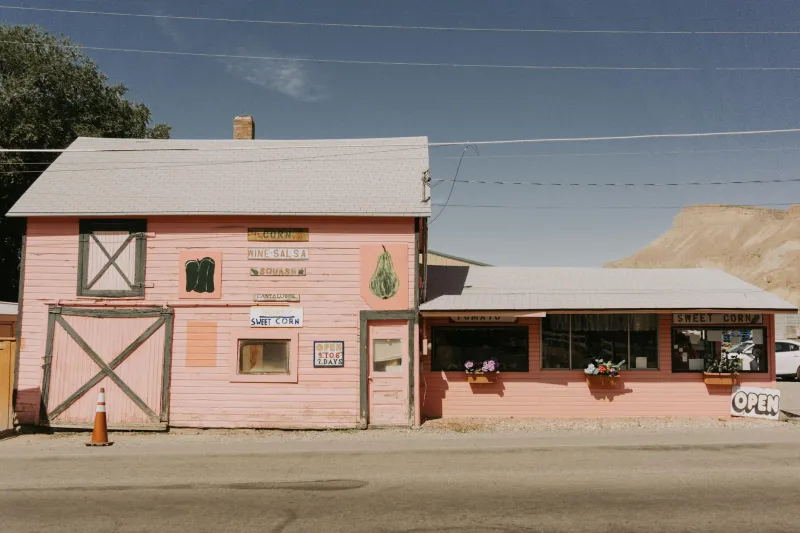
When Main Street Had a Face for Every Service and Knew Your Family's History
Every Tuesday at 3 PM, Mrs. Henderson would walk four blocks to Patterson's Meat Market, where Bill Patterson would already have her usual order wrapped and waiting: two pounds of ground chuck, a small roast for Sunday dinner, and whatever looked good for Thursday's special. Bill knew Mrs. Henderson had been coming in since 1952, that her late husband preferred his steaks well-done, and that her arthritis made it hard to carry heavy packages. He'd cut her meat exactly how she liked it and carry her order to the car without being asked.
This scene played out in thousands of American towns through the 1970s. Main Street wasn't just a place to shop — it was a network of relationships, expertise, and personal service that made commerce feel more like community. Then, in the span of about two decades, most of it disappeared.
The Ecosystem of Expertise
Mid-century American towns operated on a simple principle: specialization created both excellence and intimacy. Every neighborhood had its cast of characters — the butcher who could tell you which cut would be perfect for your dinner party, the pharmacist who remembered every medication your family had ever taken, the hardware store owner who could solve any household problem with parts from his seemingly infinite back room.
These weren't just retail transactions. They were relationships built over years of interaction. The local baker knew you liked your bread sliced thick. The shoe repair man could spot your family's walking gait from across the street. The dry cleaner knew exactly how you wanted your shirts pressed and would call if you forgot to pick up your order.
This system created remarkable depth of service. When you brought a broken toaster to Miller's Hardware, old Mr. Miller would actually fix it — not because repair was particularly profitable, but because that's what hardware store owners did. The pharmacist would explain how your new medication might interact with the vitamins you'd been buying for years. The butcher would suggest cooking methods and even share his wife's recipe for pot roast.
Knowledge was local, personal, and accumulated over generations. Store owners often inherited their businesses from parents who had served the same families for decades. They knew not just what you bought, but why you bought it, when you'd need it again, and how your needs had changed over the years.
The Economics of Personal Service
This system worked because the economics were fundamentally different. Local businesses operated on high margins and personal relationships rather than volume and efficiency. A hardware store might stock 50,000 different items in a space the size of a modern convenience store, with the owner able to locate any of them instantly.
Prices reflected this personalized service. You paid more per pound for meat at Patterson's than you would at the new supermarket across town, but you got consultation, custom cutting, and credit when times were tight. The premium wasn't just for the product — it was for the relationship.
Small business owners lived in the communities they served. They sent their kids to local schools, attended the same churches, and had genuine stakes in neighborhood success. When the Hendersons' son came home from Vietnam, Bill Patterson knew about it. When the family struggled with medical bills, he quietly extended credit without paperwork or interest.
This interconnectedness created natural customer loyalty. You didn't shop around for the cheapest price because you were buying more than products — you were investing in relationships that provided security, expertise, and community connection.
The Chain Store Revolution
The transformation began in the 1960s with the rise of national retail chains that could offer lower prices through volume purchasing and operational efficiency. Woolworth's, J.C. Penney, and early discount stores like Kmart promised the same products at significantly lower costs.
The math was compelling. Why pay $12 for a hammer at Miller's Hardware when the same tool cost $8 at the new discount store? The immediate savings were obvious; the long-term costs were invisible.
As chain stores proliferated, local businesses found themselves unable to compete on price. Their advantages — personal service, deep expertise, community connections — became less valuable to consumers focused on immediate savings. One by one, the specialists who had anchored Main Street for generations began closing their doors.
The 1980s brought an acceleration of this trend with the rise of category killers — massive specialty stores like Home Depot, Best Buy, and Toys"R"Us that could offer enormous selection at low prices. These stores were too large for downtown locations, pulling commerce away from traditional Main Streets to suburban strip malls and shopping centers.
By the 1990s, the basic infrastructure of local expertise was crumbling. The butcher, baker, and hardware man weren't just losing customers — they were losing the next generation. Their children went to college and found careers in other industries rather than inheriting businesses that no longer seemed viable.
The Walmart Effect
Walmart's expansion through the 1990s and 2000s represented the logical endpoint of the efficiency revolution. A single Walmart Supercenter could replace dozens of local businesses: butcher, baker, pharmacist, hardware store, electronics shop, automotive center, and grocery store all under one roof.
The convenience was undeniable. One-stop shopping, vast selection, rock-bottom prices, and ample parking made Walmart irresistible to busy families trying to stretch their budgets. Who had time to visit six different stores when you could get everything at one?
But Walmart's business model was fundamentally different from the local businesses it replaced. Instead of personal relationships, it offered systematic efficiency. Instead of accumulated local knowledge, it provided national standardization. Instead of community investment, it delivered shareholder returns.
The human cost became visible in countless small towns where Walmart's arrival marked the death of downtown commerce. Main Streets that had bustled for generations became rows of empty storefronts, their former proprietors either working for the big-box stores that replaced them or leaving retail entirely.
The Amazon Acceleration
Just as local businesses were adapting to big-box competition, the internet introduced an even more efficient alternative: online shopping. Amazon's promise was seductive — any product, delivered to your door, often at prices lower than any physical store could match.
The expertise that had once resided in local store owners migrated to algorithms and customer reviews. Instead of asking Bill Patterson which cut of meat would work best for your dinner party, you could read hundreds of reviews and watch YouTube videos about cooking techniques. The knowledge was still there, but it was no longer personal or local.
Amazon's impact on retail has been swift and devastating. Between 2000 and 2020, more than 75,000 retail stores closed permanently. The survivors were mostly businesses that couldn't be replicated online: restaurants, hair salons, medical offices, and a few specialty stores that managed to create experiences rather than just sell products.
The COVID-19 pandemic accelerated these trends dramatically. Lockdowns forced even reluctant consumers to embrace online shopping, while small businesses struggled with capacity restrictions and supply chain disruptions. Many local stores that had survived decades of big-box competition finally succumbed to the combination of reduced foot traffic and increased online convenience.
What Algorithms Can't Replace
The efficiency gains from this transformation are real and significant. Today's consumers have access to more products at lower prices than any generation in human history. Amazon can deliver almost anything to your door within days, often for less than you'd pay at a local store. The convenience and savings are measurable and immediate.
But something less quantifiable was lost in the transition. Algorithms can recommend products based on your purchase history, but they can't notice that you look tired and might need someone to talk to. Customer service chatbots can answer common questions, but they can't remember that your mother just passed away and you might need extra patience today.
The local expertise that took generations to accumulate — knowing which appliance brands actually last, understanding the quirks of old houses in the neighborhood, remembering which customers need extra help — largely disappeared. It was replaced by online reviews, manufacturer warranties, and standardized customer service scripts.
Personal credit, extended informally based on relationships and circumstances, gave way to algorithmic credit scoring and corporate policies. The flexibility that allowed local businesses to work with customers during tough times was replaced by systems that treated every transaction identically.
The Community Cost
Beyond individual transactions, the loss of local businesses fundamentally changed how American communities function. Main Street businesses were more than retail outlets — they were community gathering places, sources of local employment, and anchor institutions that kept money circulating within neighborhoods.
Local business owners served on school boards, sponsored little league teams, and contributed to community organizations. They had genuine stakes in local success because their livelihoods depended on neighborhood prosperity. When these businesses disappeared, so did much of the civic infrastructure that held communities together.
The economic impact extended beyond the obvious job losses. Local businesses typically spent money locally — buying supplies from nearby vendors, using local accountants and lawyers, and banking with community institutions. Chain stores and online retailers send most of their profits to distant corporate headquarters, creating a constant drain of local wealth.
Studies have shown that dollars spent at local businesses circulate within communities three times longer than money spent at chain stores. When Main Street died, it took this economic multiplier effect with it, leaving many communities economically hollowed out despite the presence of large retail employers.
What We're Trying to Rebuild
In recent years, there's been a growing recognition of what was lost when local businesses disappeared. The "shop local" movement, farmers markets, and craft breweries represent attempts to recreate some of the personal connection and community investment that characterized the old Main Street economy.
These new local businesses often combine traditional personal service with modern efficiency. The local coffee shop knows your usual order but also offers mobile ordering and loyalty apps. Independent bookstores host community events while maintaining sophisticated online presences. Craft breweries create gathering spaces while distributing their products regionally.
But recreating the comprehensive ecosystem of local expertise that once existed is proving difficult. The economic fundamentals have changed too dramatically. Commercial rents are often too high for small businesses, consumer habits favor convenience over relationships, and the knowledge base that sustained local expertise has been largely lost.
The True Cost of Convenience
The transformation from personal service to algorithmic efficiency represents one of the most profound changes in American commerce. We gained unprecedented convenience, selection, and savings. We lost personal relationships, local expertise, and community connections that had sustained neighborhoods for generations.
Whether this trade-off was worth it depends partly on what you value and partly on what you remember. For those who never experienced the old system, the current convenience seems natural and sufficient. For those who remember when the butcher knew your family's preferences and the hardware store owner could solve any household problem, something irreplaceable was lost.
The question now is whether we can find ways to combine the efficiency of modern retail with the personal connection and community investment that made the old Main Street system so valuable. The answer may determine not just how we shop, but how we live together as neighbors and communities in an increasingly digital world.