Kids Used to Beg Their Parents for the Same Toys. Now They're Asking for Things You've Never Heard Of.
The Sears Catalog Christmas
Every November, the Sears Christmas catalog arrived in the mail. It was 400 pages of desire, but the desire was constrained. For toys, there were maybe thirty pages. You flipped through them, circled what you wanted, showed it to your parents, and that was your Christmas list.
In 1975, when most American children made their lists, they were choosing from roughly the same 200 toys. Barbie had been around since 1959. G.I. Joe since 1964. Hot Wheels, Lego, Monopoly, Etch A Sketch—these were the toys. Every toy store had them. Every house on the street had them. When you went to a birthday party, you knew what toys would be there because they were everywhere.
This wasn't a limitation. It was the entire structure of childhood socialization.
When every kid in your neighborhood had a Barbie, you could have elaborate, ongoing games about Barbie. You developed complex narratives together. You could go to someone's house and immediately understand the toy landscape. You traded accessories. You modified them together. Shared toys created shared culture. It was the basis of friendship.
The Schwinn bicycle was the same way. The heavy, one-speed Schwinn with the banana seat. Nearly every kid had one or desperately wanted one. You could take it apart and customize it, but you started with the same basic object. The culture was unified.
Girls wanted Barbies. Boys wanted G.I. Joes and Hot Wheels. There was less choice, more conformity, and paradoxically, more social cohesion.
The Algorithmic Explosion
Today, there are approximately 250,000 different toys available for purchase in the United States at any given moment. A child's "wish list" isn't a list of toys anymore—it's a list of YouTube personalities, TikTok trends, and algorithmically recommended products.
A seven-year-old might want a LOL Surprise doll (which spawned a franchise worth billions), while another seven-year-old wants a Squishmallow (a market that didn't exist fifteen years ago), while a third wants a specific K-pop idol merchandise set, while a fourth wants Roblox robux (a virtual currency), while a fifth wants a gaming chair they saw a streamer using.
None of these children are making unreasonable requests. All of them are responding to targeted marketing, influencer culture, and algorithms designed specifically to create desire in their demographic.
The difference is profound: the Sears catalog created a shared menu of desire. YouTube, TikTok, Instagram, and algorithmic recommendation engines create individualized menus. Each child lives in their own toy ecosystem, targeted by their own set of advertisers, following their own influencers, consuming their own content.
The Loneliness of Choice
Research on childhood socialization has started documenting the consequences of this shift.
When children had the same toys, they had built-in conversation starters. "I have a Barbie too—let's play." Now, they have to actively negotiate interests. One child is into Roblox. Another is into TikTok. A third is into anime merchandise. There's less overlap, less shared reference points, less automatic social glue.
A 2019 study from the American Psychological Association found that children with access to the broadest range of toys actually had fewer sustained friendships. The paradox is counterintuitive: more choice led to less connection. When everyone had the same toys, the toys facilitated play. When everyone has different toys, the toys become markers of individual identity rather than bridges between children.
There's also a documented increase in toy-related anxiety. When the choice was limited to thirty toys, a child's parents could buy what they could afford, and that was normal. Now, when the choice is 250,000 toys, and each child's peer group is consuming different products, there's a constant sense of missing out. Your toy isn't the "right" toy. It's the wrong toy. It's not what the influencers are recommending. It's not what your algorithm is showing you.
Influencer unboxing videos—where someone opens and demonstrates a toy—have become a primary way children learn about toys. But unlike the Sears catalog, which was the same for everyone, each child's YouTube recommendation feed is different. A child watching LOL Surprise unboxing videos will get more LOL Surprise recommendations. A child watching Squishmallow videos will get more Squishmallow recommendations. The algorithm doesn't broaden their horizons—it narrows them, pushing deeper into whatever they've already shown interest in.
The Monetization of Childhood
The shift from mass-market toys to algorithmic, hyper-personalized products has also meant a shift in how childhood is monetized.
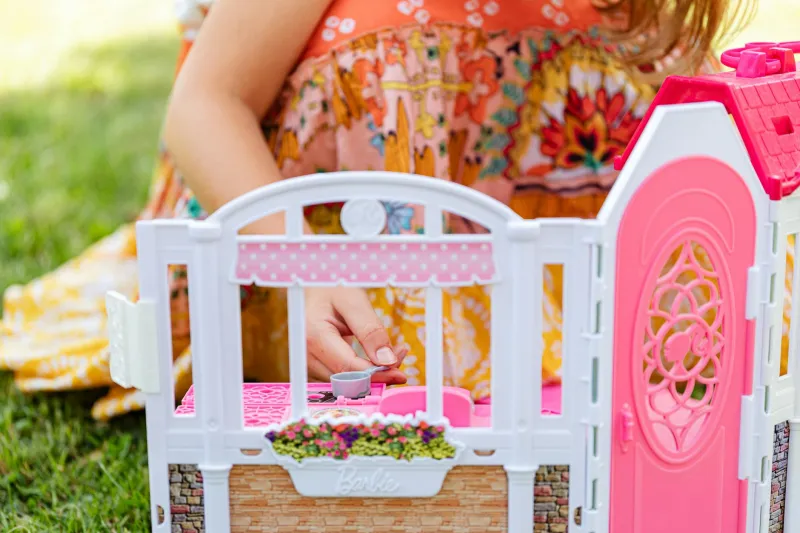
The Barbie of 1975 cost about $15 (roughly $75 in today's money). You bought it once. You owned it. The Barbie of today comes in dozens of variants, each marketed to a slightly different niche. You don't buy "a Barbie"—you buy the specific Barbie that matches your child's interest. And then there's the Barbie Dream House. And the Barbie accessories. And the Barbie clothes. And the Barbie collectible limited edition. Each one is a separate purchase, each one is marketed individually through targeted ads and influencer partnerships.
A child asking for "toys" in 1975 might result in a $30 gift. A child asking for toys in 2024 might be looking at $200 in cumulative purchases across the year, because the toys themselves are now part of larger ecosystems designed to require continuous purchasing.
LOL Surprise dolls are perhaps the most extreme example: each doll comes in a blind box, so you don't know which one you're getting. The entire business model is built on the assumption that children will buy multiple boxes to collect the full set. It's monetization disguised as play.
What Was Lost
The Sears catalog system had real limitations. It was less diverse. It reinforced gender norms more rigidly. It didn't offer personalization. A child who wanted something unusual had no way to find it.
But it created something that's harder to replicate now: a shared childhood culture. Kids could talk to each other about their toys because they had the same toys. They could collaborate on play because they understood the same objects. They had something in common.
Today's children have more choice, more personalization, and more access to niche interests. A kid who loves anime can find every anime toy ever made. A kid who loves a specific YouTuber can buy their merchandise. That's real freedom.
But it comes at a cost. Childhood is more individualized now. Each kid is in their own market segment, being marketed to separately, consuming separately, playing separately. The shared culture that used to emerge naturally from limited choice has been replaced by an algorithmic landscape where every child's experience is subtly different.
The Sears catalog had one toy section. Your kid looked at the same thirty toys as every other kid. Now there are 250,000 toys, and each child sees a different subset, recommended by an algorithm trained to maximize engagement and sales.
It's not clear which system is better. But it's undeniable that something changed. Childhood used to be more alike. Now it's more individual. And lonelier.