When Lunch Was Sacred: How America's Midday Break Became Another Email to Answer
When Lunch Was Sacred: How America's Midday Break Became Another Email to Answer
Walk into any office building at 12:30 PM today, and you'll find a peculiar sight: hundreds of people hunched over their desks, mechanically chewing sandwiches while their eyes remain glued to computer screens. The only sound breaking the silence might be the occasional ping of a Slack notification or the crinkle of a takeout bag.
This scene would have been utterly foreign to American workers in 1960.
The Sacred Hour That Actually Belonged to You
Fifty years ago, lunch wasn't just a meal — it was a cultural institution. From the factory floor to the corner office, the lunch hour was genuinely an hour, and it was yours. No manager expected you to answer phones. No client assumed you'd respond to urgent requests. The American workplace operated on an unspoken agreement: from noon to 1 PM, you were off duty.
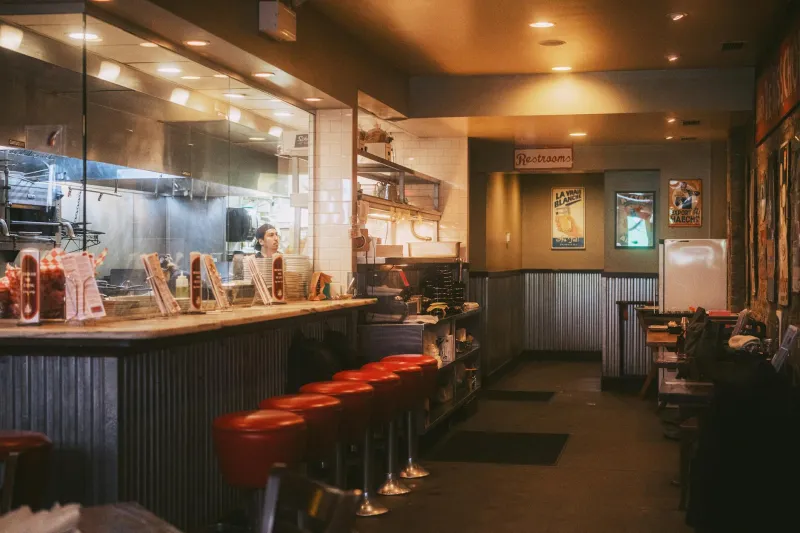
The lunch counter at Woolworth's, the company cafeteria, or the neighborhood diner became the most democratic spaces in America. Executives sat next to secretaries. Factory workers shared tables with salesmen. Conversations flowed freely across social and economic lines in a way that the rigid hierarchy of the office simply didn't allow.
"Everyone went out for lunch," recalls Margaret Thompson, who worked as a secretary in downtown Chicago during the 1960s. "The whole office would empty out at noon. We'd walk to the cafeteria together, sit together, talk about everything except work. It was the best part of the day."
The Ritual of Really Eating
Lunch in mid-century America was an event, not a task to be optimized. Meals were served on actual plates with real silverware. You sat in a chair designed for sitting, not for typing. The food was hot, prepared by someone whose job was cooking, not reheating.
The typical lunch lasted 45 to 60 minutes — time enough for your food to digest, for real conversations to develop, and for your mind to genuinely disconnect from work. Workers would linger over coffee, debate the morning's headlines, or simply enjoy the rare pleasure of eating without multitasking.
Compare this to today's reality: the average American lunch "break" lasts 19 minutes, and 62% of workers eat at their desks while continuing to work. We've convinced ourselves this is efficiency, but we've lost something profound in the process.
When Productivity Became the Only Virtue
The transformation didn't happen overnight. The shift began in the 1980s as corporate culture embraced the idea that every minute not spent working was somehow wasted. The lunch hour became the lunch "break" — a concession rather than a right.
Technology accelerated the change. Email meant urgent requests could find you anywhere. Cell phones eliminated the excuse of being unreachable. Suddenly, leaving your desk for an hour felt almost rebellious, as if you were abandoning your responsibilities.
The rise of "working lunches" marked another nail in the coffin of the genuine break. What had once been personal time became just another venue for meetings, networking, and deal-making. Even when we gathered around food, we never really stopped working.
The Social Cost of Eating Alone
Something important died when Americans stopped eating lunch together. The lunch counter and company cafeteria served as crucial social equalizers — spaces where workplace hierarchies temporarily dissolved and genuine human connections could form.
These weren't just pleasant social moments; they were essential to how organizations functioned. Problems got solved over coffee. New ideas emerged from casual conversations. Workers developed the kind of personal relationships that made collaboration natural rather than forced.
Today's office culture, for all its talk of "team building" and "collaboration," has systematically eliminated the organic spaces where teams actually built themselves. We've replaced the natural social rhythms of shared meals with scheduled "team lunches" that feel more like work assignments than genuine breaks.
The Health We Lost Along the Way
The physical and mental health consequences of our lunch transformation are staggering. Eating while stressed — which describes most desk-side lunches — impairs digestion and nutrient absorption. The lack of a genuine midday break contributes to the chronic stress that defines modern work life.
Medical research consistently shows that workers who take proper lunch breaks are more productive, creative, and satisfied with their jobs. Yet somehow, we've created a culture where taking that break feels like laziness rather than self-care.
What We're Missing
The old lunch hour represented something deeper than just eating — it was a daily reminder that you were a complete human being, not just a worker. It acknowledged that nourishment, conversation, and rest weren't luxuries to be squeezed in around productivity, but essential elements of a life well-lived.
When we gave up the lunch hour, we didn't just lose time to eat. We lost a daily practice of community, a moment of shared humanity in the middle of our individual struggles. We lost the simple revolutionary act of saying, "For this one hour, I belong to myself."
Today's workers might have more career flexibility and technological conveniences than their 1960s counterparts, but they've inherited a culture that views every moment as potential productivity. The lunch counter may be gone, but the need for genuine breaks — for food, for conversation, for the radical act of not working — remains as essential as ever.
Perhaps it's time to remember what our grandparents understood instinctively: some things are too important to optimize.