The House Closed on a Friday and He Moved In on Saturday. No One Asked for 87 Documents.

Photo: jeff covey, CC BY-SA 2.0, via Wikimedia Commons
In 1952, a 24-year-old factory worker in suburban Detroit sat across a desk from a loan officer at a savings and loan he'd been banking with since he turned 18. The officer knew his father. He knew where he worked, because half the neighborhood worked at the same plant. The conversation lasted about forty minutes. He was approved before lunch.
The paperwork was thin enough to fit in a manila envelope. He signed a few pages, shook a hand, and was handed the keys to a three-bedroom house in a new development off Telegraph Road. The whole transaction — from first conversation to move-in day — took about three weeks.
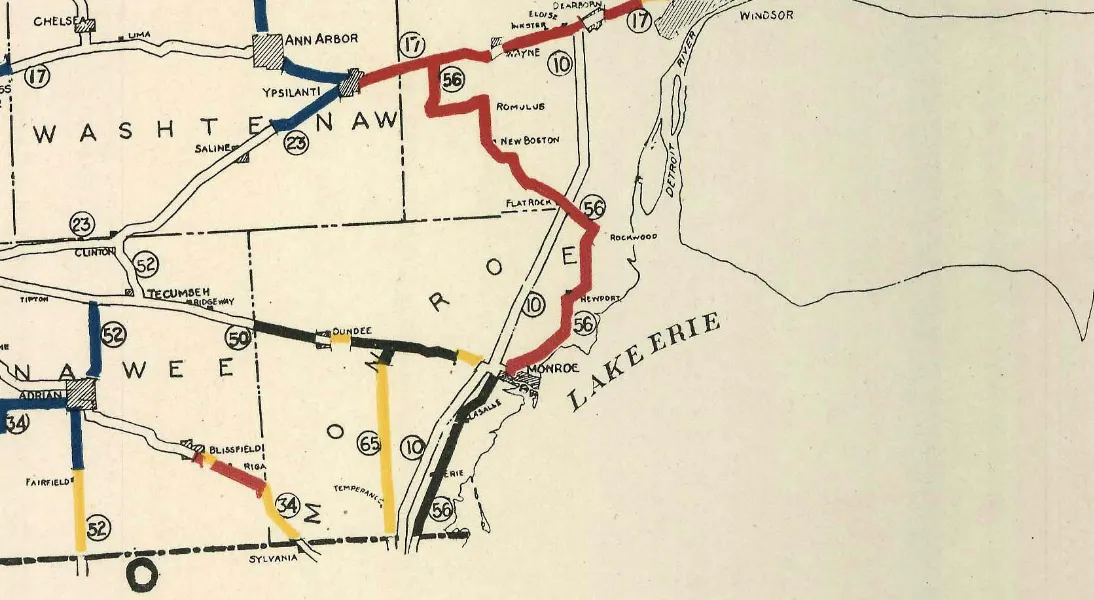 Photo: Telegraph Road, via 1.bp.blogspot.com
Today that same journey takes an average of 49 days just to close after an offer is accepted. The paperwork stack, if printed, runs to hundreds of pages. And that forty-minute conversation has been replaced by a process that involves mortgage brokers, loan officers, underwriters, title companies, escrow agents, home inspectors, appraisers, real estate attorneys, and at least one person whose specific job title you will never fully understand.
The World That Made the Simple Mortgage Possible
The postwar home-buying experience wasn't simple because Americans were naive or banks were careless. It was simple because the entire ecosystem around homeownership was built at a different scale, with different assumptions, and — critically — with different relationships at its center.
Savings and loan associations, which dominated home lending through much of the mid-20th century, were community institutions. They took deposits from local residents and made loans to local buyers. The loan officer wasn't running an application through a national algorithm; he was making a judgment call about a neighbor. That judgment was backed by knowledge that no database could replicate — the kind that comes from knowing someone's family, their employer's stability, and the neighborhood they're buying into.
The GI Bill accelerated all of this. The Veterans Administration loan program, introduced in 1944, guaranteed mortgages for returning servicemen with terms that were almost shockingly accessible: no down payment required, low interest rates, and qualifying standards designed to get veterans into homes rather than to protect institutional investors. Millions of Americans bought their first homes under conditions that were deliberately engineered to be easy.
 Photo: Veterans Administration, via c8.alamy.com
Housing prices in this era bore a rational relationship to local wages. A median-priced home in 1950 cost roughly twice the median annual household income. That ratio — two to one — meant that a single working adult could realistically aspire to homeownership within a few years of starting a career.
The Machine That Replaced the Handshake
The shift began in earnest in the 1970s and 1980s as mortgage lending was transformed by a process called securitization. Rather than holding loans on their own books, banks began packaging them and selling them to investors on secondary markets. Fannie Mae and Freddie Mac — government-sponsored enterprises that had existed for decades — became the backbone of a system that allowed mortgage capital to flow nationally.
This was genuinely good for homeownership in many ways. It freed up lending capital, spread risk, and helped bring mortgage rates down. But it also fundamentally changed what a mortgage was. A loan that would be packaged, sold, and held by investors in another state needed to be standardized. It needed documentation that a stranger could evaluate. The personal knowledge of the local loan officer became irrelevant — and eventually, it disappeared entirely.
By the 1990s, the mortgage application had grown dramatically in complexity. Borrowers were asked to document income, employment, assets, debts, and credit history in exhaustive detail. The 2008 financial crisis — triggered in significant part by loans made without adequate documentation — pushed the process further still. The Dodd-Frank Act of 2010 introduced the Ability-to-Repay rule, requiring lenders to verify, in documented form, that borrowers could actually afford what they were borrowing.
The intent was sound. The result was a process that can feel, to a first-time buyer, like applying for a security clearance.
The Cast of Characters
One of the most striking differences between then and now isn't the paperwork itself — it's the number of people involved.
The 1952 buyer dealt with one person at one institution. Modern buyers navigate a relay race. A real estate agent helps find the property. A mortgage broker shops for lenders. A loan officer processes the application. An underwriter reviews it — often without ever speaking to the borrower. A title company ensures the property's legal history is clean. An escrow company holds funds during the transaction. An appraiser assesses value. An inspector examines the structure. A real estate attorney may review documents depending on the state.
Each of these professionals is necessary. Each adds cost. Closing costs alone — the fees paid at the moment of purchase — typically run between 2 and 5 percent of the loan amount. On a $400,000 home, that's up to $20,000 paid before the buyer has spent a single night under their new roof.
The 1952 buyer's closing costs were, by comparison, negligible.
What the Numbers Say About Trust
There's a deeper story in all of this that goes beyond inconvenience or expense. The transformation of the mortgage process is, at its core, a story about institutional trust — or the loss of it.
The old system trusted people. Specifically, it trusted local people to make local judgments about other local people. That trust was sometimes misplaced, and it was distributed unequally in ways that were often deeply unjust — redlining and discriminatory lending practices denied homeownership to Black Americans and other minorities across the same postwar decades that built the white middle class. That history cannot be separated from any honest account of how the simple mortgage worked.
The new system trusts documentation. It trusts algorithms. It trusts standards applied uniformly across millions of applications by institutions that will never meet the people whose lives they're adjudicating. That uniformity corrected some of the old system's worst abuses. But it also made the whole thing colder, slower, and far more expensive to navigate.
Somewhere between the handshake and the 800-page closing package, buying a home stopped being a milestone and became a project. Your father walked out of that bank with keys in his pocket and moved in the next morning. You'll spend three months gathering pay stubs and explaining a $1,200 deposit from eight months ago that was just your cousin paying you back for concert tickets.
The house is still there at the end of it. But the road to get there is almost unrecognizable.