Before the Interstate, Getting Across America Was an Adventure — Whether You Wanted One or Not
Before the Interstate, Getting Across America Was an Adventure — Whether You Wanted One or Not
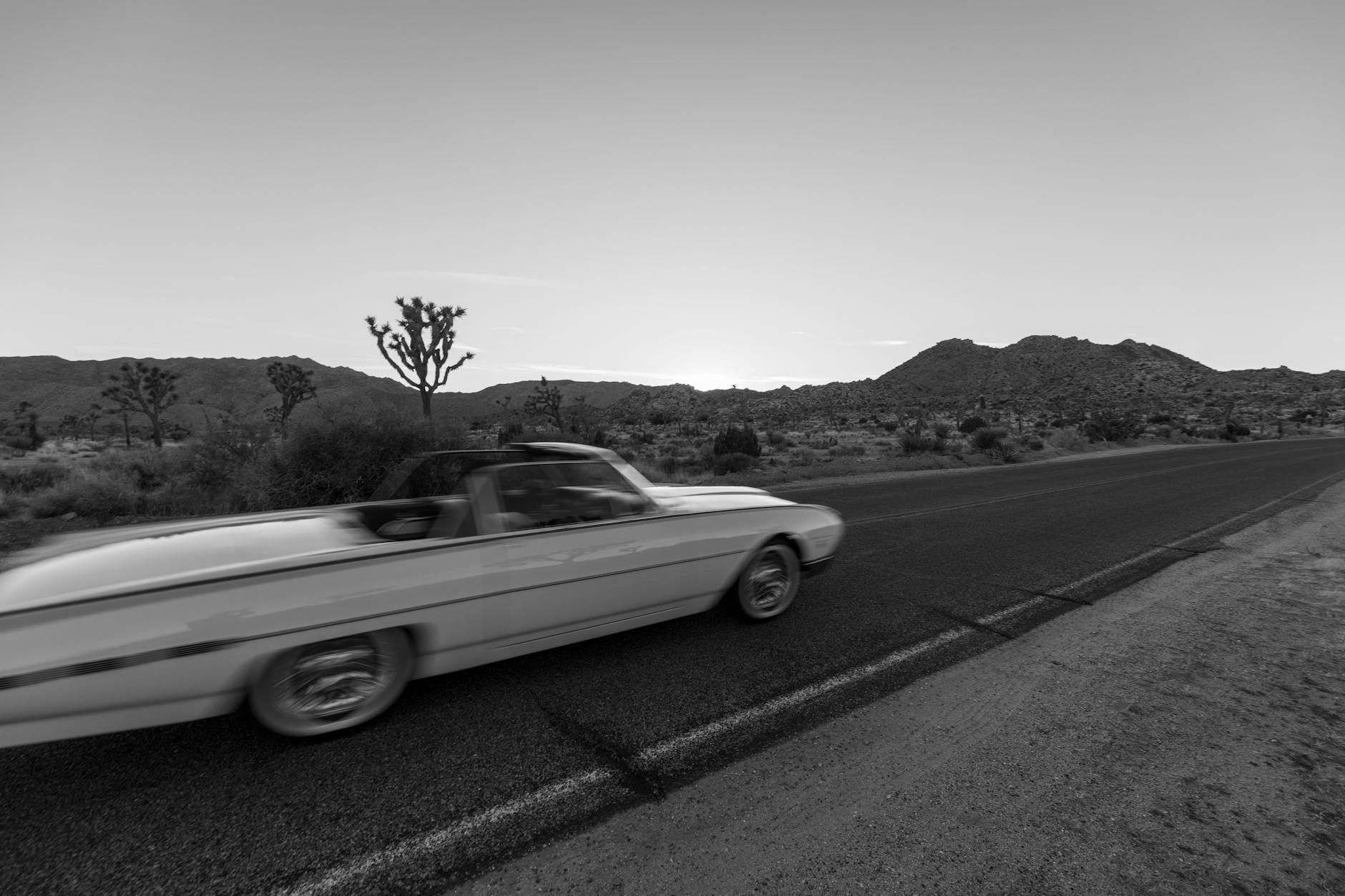
There's something romantic about the idea of a classic American road trip. Open road, windows down, the whole country stretching out in front of you. But if you'd actually attempted that trip in 1950 — loaded up the family Studebaker and pointed it toward California — the romance would have worn off somewhere around the third unpaved detour in rural Kansas.
The coast-to-coast drive we take for granted today is almost unrecognizable compared to what it meant seventy-odd years ago. And the story of how it changed tells you a lot about America itself.
What the Road Actually Looked Like in 1950
Before President Eisenhower signed the Federal Aid Highway Act in 1956, the American road network was, to put it generously, a patchwork. The primary cross-country route was U.S. Route 66 — the famous "Mother Road" immortalized by Steinbeck — but romanticizing it is a lot easier in hindsight than it was in practice.
Route 66 and its contemporaries were two-lane state roads that passed directly through the center of every small town along the way. Stop signs. Traffic lights. Speed limits that dropped to 25 mph through Main Streets that seemed to appear every fifteen miles. In open stretches between towns, the roads were often unpaved, prone to flooding, and completely unmarked when weather turned bad. Travelers carried physical maps — the fold-out kind that never quite folded back the right way — and relied heavily on word-of-mouth from gas station attendants about what lay ahead.
A coast-to-coast drive in that era typically took between ten days and two weeks, assuming nothing went wrong. And things went wrong regularly. Flat tires were a near-daily occurrence on rough road surfaces. Radiators overheated crossing the desert. Breakdowns in remote stretches meant waiting — sometimes for hours — for another traveler to pass.
There were no rest stops as we know them. Travelers depended entirely on roadside diners, motor courts, and the occasional tourist cabin for food, fuel, and sleep. These stops weren't just conveniences — they were lifelines. Locals running a diner in a small Oklahoma town might be the only source of a hot meal within forty miles. That dependency created a kind of intimacy between traveler and place that's almost impossible to replicate today.
Eisenhower's Ribbon of Asphalt
The Interstate Highway System didn't emerge from a love of road trips. Eisenhower had been impressed — and sobered — by Germany's Autobahn during World War II, and he pushed for a national highway network primarily for military and civil defense purposes. The idea was that troops and equipment needed to move quickly across the country. Tourism was almost an afterthought.
But the effect on American life was seismic. Over the following decades, the interstates bypassed thousands of small towns. Route 66 communities that had thrived on traveler traffic — diners, motels, repair shops — found themselves stranded a few miles off the new highway, and many never recovered. The economic logic was brutal and efficient: the interstate moved people faster, which meant they spent less time, and less money, along the way.
By the 1970s, the basic shape of the modern road trip had formed. By the 1990s, it was nearly complete.
The Same Trip Today
Drive from New York to Los Angeles now and you're looking at roughly 2,800 miles. With steady highway driving — which the interstates make entirely achievable — most drivers cover it in about 40 to 45 hours of actual road time, typically spread across four or five days if you're not in a hurry, or as few as two if you are.
The infrastructure supporting that journey is almost absurdly comprehensive compared to 1950. Rest stops appear every 30 to 50 miles on major interstates, most with clean bathrooms, vending machines, and Wi-Fi. Gas stations cluster around every exit. Your phone's navigation app knows about the traffic jam thirty miles ahead and has already rerouted you around it. If your car breaks down, roadside assistance can locate you by GPS within minutes.
Hotel chains line the interstates with such regularity that choosing where to sleep has become more about brand loyalty points than genuine discovery. The same dozen fast food options repeat themselves from New Jersey to New Mexico. The experience is smooth, predictable, and — depending on your perspective — either reassuringly reliable or completely sterile.
What Got Left Behind
Here's the thing about efficiency: it tends to sand down the edges. The edges, in this case, were the unexpected conversations with a diner owner in Tucumcari, the detour through a town you'd never heard of, the slow accumulation of places that made a cross-country drive feel genuinely different from one stretch to the next.
Travelers in 1950 didn't have the luxury of bypassing America. They drove through it, town by town, and the country revealed itself in fragments. That was inconvenient, sometimes genuinely difficult — and also kind of the whole point.
The modern road trip is faster, safer, and dramatically more comfortable. No reasonable person would argue otherwise. But there's a reason so many Americans still seek out Route 66 specifically — driving a road that's slower, rougher, and harder to navigate — just to feel something the interstates have engineered away.
Progress has a way of solving problems we didn't know we'd miss.