Your Doctor Used to Remember Your Mother's Maiden Name. Now They Can't Remember Your Name.
When Medicine Knew Your Story
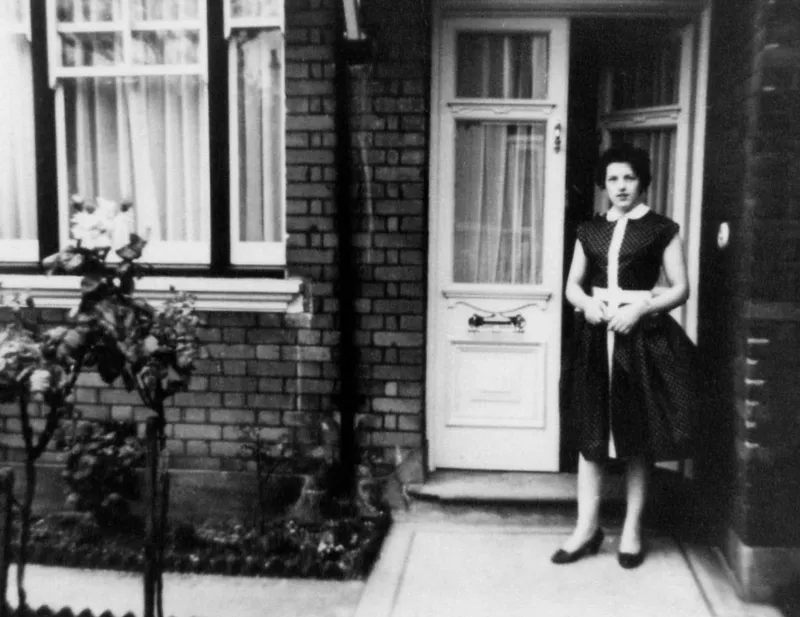
In 1955, if you got sick, you called Dr. Patterson. He'd been your family's doctor for twenty-three years. He knew that your father had weak lungs, that your mother got migraines in the fall, that you were allergic to penicillin—not because he'd pulled up an electronic record, but because he'd written it down by hand in a leather-bound notebook and reviewed it before he climbed the stairs to your bedroom.
Dr. Patterson didn't just treat you when you were ill. He watched you grow. He knew when you'd started school, when you'd broken your arm falling off the Schwinn, when you got your first job. He'd delivered your younger sister. He'd pronounced your grandfather dead. He was a fixture in American life so ordinary that nobody thought to comment on it—until it was gone.
Today, the average American sees four different primary care physicians over a decade. The median appointment lasts twelve minutes. Your doctor has no idea whether you have a sibling, what your father died of, or whether you can actually afford the medication he's prescribing. The information exists somewhere in the cloud—scattered across hospital systems that don't communicate, insurance databases, patient portals you barely check, and the increasingly fatigued brain of a physician who sees forty patients a day.
The Shift Nobody Talked About
The transition from the family doctor era to the modern fragmented system didn't happen because of a single policy or invention. It happened gradually, then suddenly, across three decades.
In the 1960s and 1970s, medicine became specialized. That was progress. A cardiologist knew more about your heart than a generalist ever could. But specialization required referrals, which required more doctors, which meant you weren't seeing the same person twice. The interstate highway system made it easier to drive to a hospital in the next town rather than wait for a house call. Insurance companies started requiring prior authorization. Malpractice lawsuits increased. Doctors began practicing defensive medicine, ordering more tests, documenting everything—not for continuity of care, but for legal protection.
By the 1990s, the economics of American medicine had fundamentally shifted. Insurance reimbursement rates favored volume over relationship. Hospitals consolidated. Solo practices disappeared. The neighborhood doctor with the handwritten notebook couldn't compete with a twenty-location urgent care franchise that took your insurance and could get you in today.
Then came the electronic health record in the 2000s—supposedly the technology that would finally unify fragmented care. Instead, it became a tool for billing optimization and legal documentation. Your complete medical history is now digitally accessible. It's also completely unusable because it's written in medical jargon, scattered across incompatible systems, and designed for insurance companies rather than doctors or patients.
What We Gained (And It Matters)
Let's be honest: the old system had real limitations. Dr. Patterson couldn't have diagnosed your appendicitis without the imaging technology that didn't exist in 1955. He couldn't have prescribed the targeted cancer drugs that have doubled survival rates since then. He couldn't have caught your heart disease before you had a heart attack because he didn't have the tests to see it coming.
Modern medicine is quantifiably, undeniably better at keeping you alive. A woman diagnosed with breast cancer today has an 89% five-year survival rate. In 1975, it was 75%. That's not nostalgia—that's thousands of lives saved by specialization, research, and the ability to access cutting-edge treatment.
The data-driven approach has also democratized medicine. You don't have to be lucky enough to live near a brilliant doctor. You can get a second opinion. You can research your condition. You can see a cardiologist who's trained specifically in your problem.
But here's what's harder to measure: the person sitting across from the doctor now isn't a human with a story. You're a set of data points. Your anxiety about money doesn't show up in the EHR. The fact that you live alone and can't manage a complex medication schedule doesn't register. The doctor doesn't know that you stopped taking your blood pressure medication because you couldn't afford it, so when your numbers are high at the next visit, he assumes you're non-compliant rather than broke.
The Loneliness of Precision
Studies now show that patients who see the same primary care physician have better health outcomes, better medication adherence, and—paradoxically—lower total healthcare costs. They catch problems earlier. They know when something is genuinely wrong versus when it's just you being anxious.
But the incentive structure of American medicine doesn't reward continuity. It rewards throughput. It rewards specialists over generalists. It rewards urgent care visits and emergency room referrals over the quiet conversation that prevents them.
A 2023 survey found that 40% of Americans say they don't have a regular doctor. Among those who do, most report that their doctor doesn't know them well. The loneliness people describe isn't about missing the house calls—it's about being a stranger to the person responsible for your health.
Dr. Patterson wouldn't have had an MRI to diagnose your condition. But he would have known you well enough to notice when something changed. He would have asked about your life. He would have remembered your name when you called.
We traded that for precision. Whether that was the right trade is a question every patient is learning to answer on their own.