Steak at 30,000 Feet Was Real — But So Was the $3,000 Ticket Price. The Truth About Flying's Golden Age
Steak at 30,000 Feet Was Real — But So Was the $3,000 Ticket Price. The Truth About Flying's Golden Age
The mid-century American flight experience sounds like a fantasy — white-gloved service, silver cutlery, and a cocktail lounge somewhere over Kansas. And it was genuinely that luxurious. It was also something that almost nobody outside the upper class could afford. The story of how flying changed in America is more complicated — and more interesting — than pure nostalgia lets on.
What Flying Actually Looked Like in 1965
Let's set the scene honestly. In 1965, boarding a commercial flight in the United States was a genuinely different kind of experience. Passengers dressed up — suits, dresses, hats. Not because airlines required it, but because flying was considered a special occasion. The cabin was spacious by any modern standard: seat pitch (the distance between rows) on a typical domestic flight averaged around 34 to 36 inches. Today, budget carriers routinely offer 28 to 29 inches.
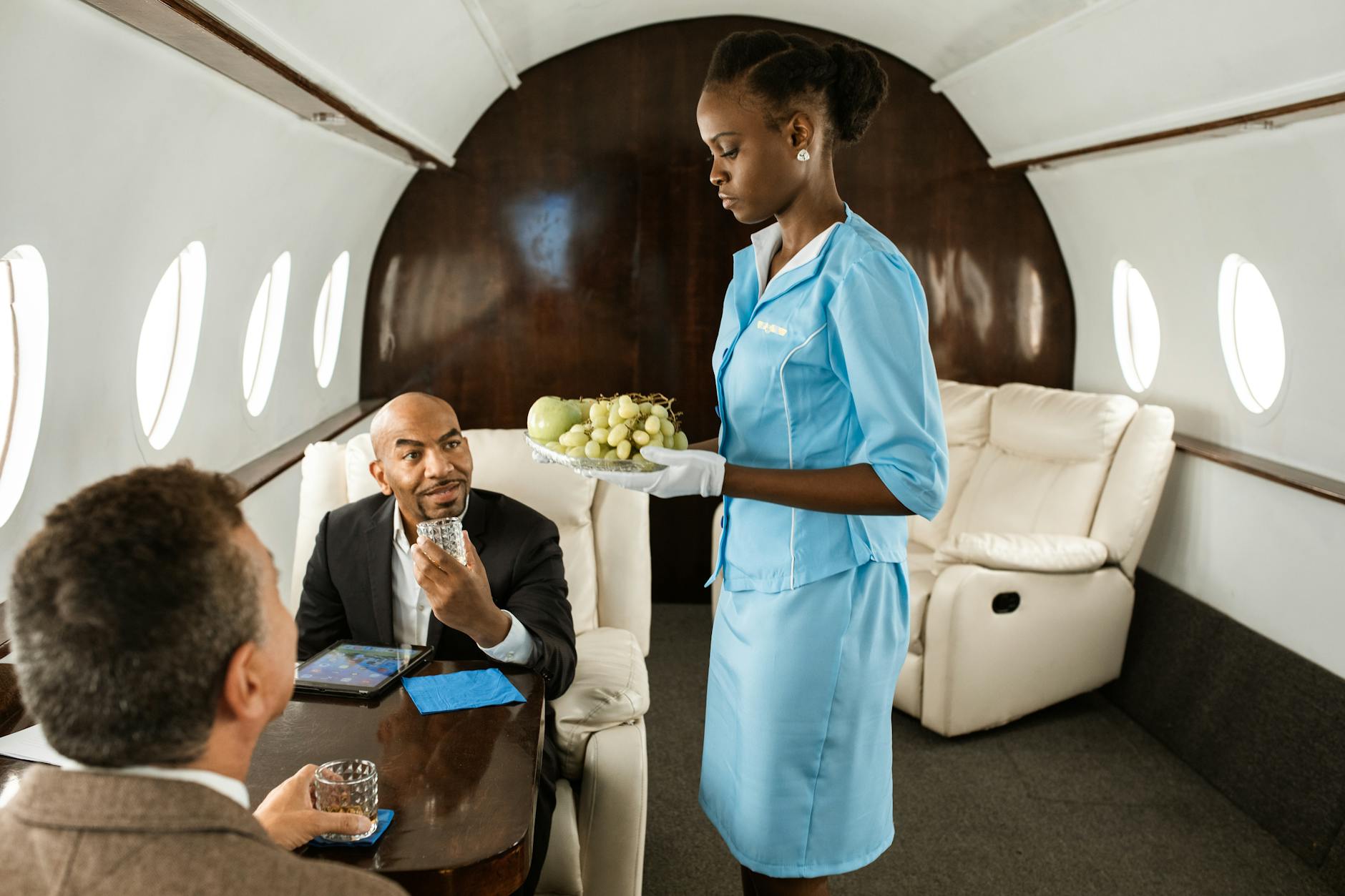
The meal service was real food, prepared properly. Pan Am and American Airlines served multi-course dinners on transatlantic routes — shrimp cocktail, carved roast beef, dessert with real silverware. Even on domestic flights, hot meals were standard. Some carriers operated full lounge sections on wide-body aircraft, where passengers could get up, stretch, and order a drink from a proper bar while cruising at altitude.
Flight attendants — called stewardesses at the time, a term that came with its own troubling set of industry standards around appearance and age — were trained extensively in hospitality. The service was attentive, unhurried, and designed to make passengers feel genuinely cared for.
By most comfort metrics, it was superior to what you'll find on a domestic economy flight today. That part of the nostalgia is legitimate.
The Part Nobody Mentions: Who Could Actually Afford a Ticket
Here's where the picture gets more complicated. A round-trip coach ticket from New York to Los Angeles in 1965 cost approximately $220. Adjusted for inflation, that's somewhere between $2,100 and $2,400 in 2024 dollars.
Let that land for a moment. A coach ticket — not first class, not business class — cost the equivalent of over two thousand dollars in today's money. For a round trip.
The median household income in the US in 1965 was around $6,900 per year. A family of four flying round-trip from New York to California would have spent nearly a third of their annual income on airfare alone, before hotels, food, or anything else.
Flying in 1965 was not a middle-class activity. It was something that executives, celebrities, and wealthy families did. A factory worker in Detroit, a schoolteacher in Georgia, a nurse in Arizona — these people did not fly for vacation. They drove, or they took the train, or they stayed home.
The glamour of mid-century air travel was real. But it was glamour that excluded the vast majority of Americans by price.
Deregulation and the Democratization of the Sky
The transformation began with the Airline Deregulation Act of 1978, signed by President Carter. Before deregulation, the Civil Aeronautics Board controlled which routes airlines could fly and what they could charge. Fares were fixed. Competition was limited. The result was a comfortable, exclusive, and financially stable industry that served a narrow slice of the population.
Deregulation changed everything. Airlines could now set their own prices, enter new routes, and compete directly against each other. New low-cost carriers emerged. Established airlines were forced to cut costs aggressively to survive. The race to the bottom — in prices and, eventually, in amenities — had begun.
By the mid-1980s, airfares had dropped dramatically in real terms. By the 1990s, flying had become accessible to the American middle class in a way it simply hadn't been before. By the 2000s, budget carriers like Southwest were offering fares that made a weekend trip genuinely affordable for ordinary working families.
Today, a round-trip coach fare from New York to Los Angeles can be found for $200 to $350 on sale — a fraction of the inflation-adjusted 1965 price. Millions of Americans who would never have set foot on a plane in the golden age now fly regularly for work, family visits, and vacations.
What You Actually Gave Up — and What You Gained
The trade-off is real and worth naming plainly. Legroom shrank. Meals disappeared, replaced by a $12 snack box. Seats got narrower. Checked baggage started costing extra. The lounge car became a distant memory. Flying became, in many ways, an exercise in managed discomfort — something to endure rather than enjoy.
Flight attendants went from hospitality professionals with relatively generous working conditions to service workers managing overcrowded cabins with minimal staffing. The experience for passengers declined. The experience for airline employees declined more.
But here's the honest counterweight: in 1965, your grandmother probably never flew. Your parents might have flown once or twice in their lives, for something significant. Today, Americans take roughly 900 million domestic flights per year. The sky opened up. It just got a lot more crowded.
Progress Doesn't Always Feel Like Progress
The golden age of air travel is worth mourning a little. There was something genuinely elegant about the way it was done — the care, the space, the sense of occasion. Those things had value, and their absence is a real loss.
But nostalgia has a way of cropping the frame. The steak dinner at 30,000 feet was wonderful. The $2,400 ticket price that paid for it meant most Americans never got to try one.
What replaced it is louder, more cramped, and considerably less dignified. It also carried the American middle class into the sky for the first time. That's not a small thing — even if the pretzels are terrible.