Your Memories Used to Live in a Shoebox. Now They Live on a Server Someone Else Owns.
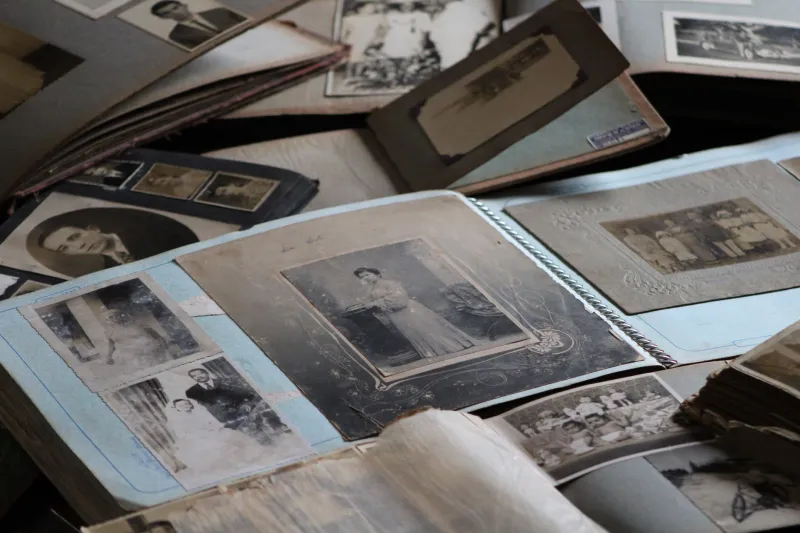
There's a cardboard box in a lot of American attics right now. It's beaten up, maybe held shut with a rubber band, and filled with photographs that are thirty, forty, maybe sixty years old. The colors have shifted a little — reds gone orange, blues gone gray — but the images are still there. The faces are still clear. Nobody paid a monthly fee to keep them.
That box has survived house moves, basement floods, and the deaths of the people who took those pictures. It asked nothing of you except a little storage space. And somehow, against all odds, it worked.
Now consider your photos from last Tuesday.
The Age of the Print
For most of the twentieth century, the process of keeping a photograph was beautifully straightforward. You took your roll of film — twenty-four or thirty-six exposures, no more — to a drugstore or a photo counter at a department store. A few days later, you picked up an envelope of prints. You paid once. You owned them forever.
There was something about the limited supply of shots that made people deliberate. You didn't take fourteen photos of your lunch. You saved your frames for things that mattered: birthday parties, Christmas mornings, a kid's first steps. When the prints came back, you sorted through them at the kitchen table, slid the best ones into albums with magnetic pages, and handed duplicates to grandparents.
Those albums then sat on shelves for decades. No password required. No subscription. No notification telling you your storage was almost full. You could flip through them at 2 a.m. without logging into anything.
The photos weren't perfect. Some were blurry. Some were badly lit. But they were yours in a way that felt absolute.
The Shift That Felt Like Progress
Digital cameras started the transition in the late 1990s, but it was the smartphone that finished the job. Suddenly everyone had a camera in their pocket, and the cost per photo dropped to essentially zero. The average American now takes more photographs in a single year than their grandparents took in a lifetime.
Cloud storage followed naturally. Google Photos, iCloud, Amazon Photos — these services promised something irresistible: unlimited memory, always accessible, never lost. And for a while, it genuinely felt like an upgrade. No more searching through boxes. No more faded prints. Everything organized, searchable, even sorted automatically by face or location.
But somewhere in that convenience, something fundamental shifted. You stopped owning your photos and started renting access to them.
What Ownership Actually Means
Here's the part most people don't think about until it's too late.
In 2021, Google ended its free unlimited photo storage. Millions of Americans suddenly found themselves paying for space they'd assumed was permanent. In 2023, users of various platforms discovered that accounts could be suspended — sometimes erroneously, sometimes permanently — taking entire photo libraries with them. Amazon has changed its storage terms multiple times. Apple charges monthly for anything beyond 5GB, which fills up fast when your phone shoots in high resolution.
And that's before you factor in what happens when a company simply shuts down. Platforms that seemed permanent have disappeared before. There's no guarantee that the service storing your daughter's first birthday photos will exist in fifteen years.
Your grandmother's photo album doesn't need a Terms of Service agreement. It doesn't get deprecated. It doesn't require you to update your payment method.
The Paradox of Having Everything and Losing It Anyway
Here's the strange irony at the center of all this: we take more photos than ever before, and we look at fewer of them.
When you had twenty-four shots on a roll, you printed them all and spread them on the table. You looked at every single one. Today, most photos sit in a cloud library that nobody browses. They're backed up but essentially invisible, buried under thousands of other images that were taken just as casually and forgotten just as quickly.
There's also the question of what happens to those images when you're gone. A physical album can be passed from hand to hand at a funeral, carried home by a cousin, tucked into someone else's attic. A cloud account with a forgotten password is effectively sealed forever.
Some families are pushing back. Photo printing services have seen a quiet resurgence in recent years. Companies like Chatbooks and Artifact Uprising have built entire businesses around the idea that digital photos are only meaningful once they're physical again. It's a telling sign that the old model had something worth recovering.
What We Gained, and What We Should Admit We Lost
It would be unfair to pretend the old system was flawless. Prints did fade. Albums did get lost in fires. Negatives got thrown away. Physical storage had its own vulnerabilities.
And the ability to capture a moment instantly — to photograph something beautiful or funny or important without running out of film — is genuinely wonderful. The cloud means that even if your phone breaks, your photos survive. That's not nothing.
But there's a difference between a backup and true ownership. And right now, for most Americans, their most personal memories exist in a state of conditional access — available as long as they keep paying, as long as the company stays solvent, as long as their account stays in good standing.
Your grandmother's shoebox asked nothing of her. It just held her memories until someone was ready to look.
That's a standard worth thinking about the next time you get an email telling you your iCloud storage is almost full.