The Grocery Store Used to Be Simple. Now It's a Psychological Obstacle Course.
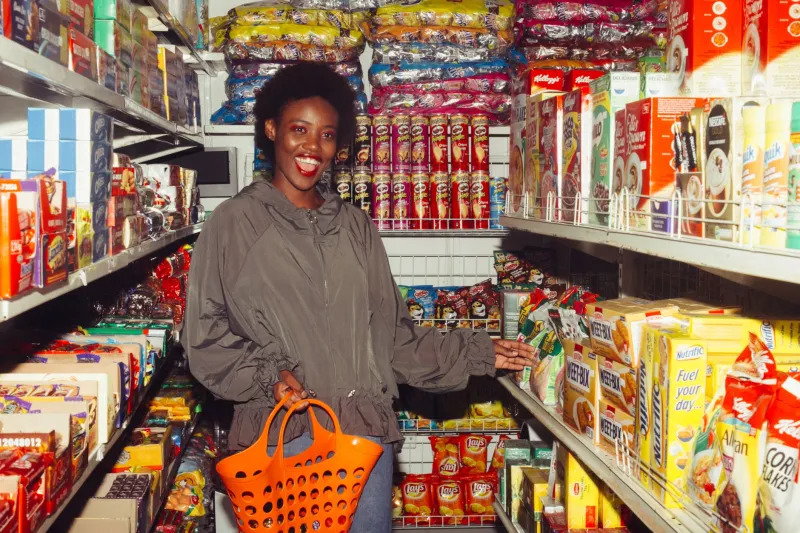
There was a time when your mom could walk into the A&P on a Tuesday morning, fill a cart with everything the family needed for the week, and know — within a few dollars — exactly what she'd hand over at the register. No app. No loyalty card. No mental math at the chip-and-dip aisle. Just a list, a cart, and a reasonable expectation that the price on the shelf was the price you paid.
That world is gone. And most of us barely noticed it leaving.
What a Grocery Run Looked Like in 1983
In the early 1980s, American supermarkets were straightforward places. Prices were printed on the items themselves — not just on shelf tags — because the FTC had pushed for clear labeling, and consumers expected it. A can of Campbell's tomato soup cost around 29 cents. A dozen eggs ran about 89 cents. A pound of ground beef hovered near a dollar fifty. Families budgeted loosely and landed close to their estimates every single week.
More importantly, the product itself was honest. A 16-ounce box of cereal held 16 ounces. A half-gallon of orange juice was actually half a gallon. The relationship between what you paid and what you got was, by today's standards, almost quaint in its simplicity.
Coupons existed, sure. Weekly circulars landed on the doorstep. But the game wasn't rigged. You either clipped the coupon or you didn't. The store wasn't tracking which aisle you lingered in or adjusting prices based on your purchase history.
Enter Shrinkflation: The Trick That's Hard to See
Sometime in the 1990s and accelerating sharply into the 2000s, manufacturers discovered something clever: consumers notice price increases immediately, but they rarely notice when the package quietly gets smaller.
A bag of potato chips that held 16 ounces in 2010 might hold 13 ounces today — at a higher price. That half-gallon of orange juice became 52 ounces. Then 59. The Tropicana carton didn't announce the change. It just happened, subtly, between shopping trips, until one day you poured the last glass and thought, huh, that ran out fast.
The Bureau of Labor Statistics has acknowledged shrinkflation as a genuine economic phenomenon, but it's notoriously difficult to track because it doesn't show up cleanly in standard inflation figures. You're paying more per ounce, but the sticker price looks stable. It's inflation wearing a disguise.
Loyalty Programs: Your Data for a Discount
Here's where it gets genuinely strange. Walk into most major grocery chains today — Kroger, Safeway, Albertsons — and you'll quickly realize that the posted price isn't really the price. The real price is the one you get after scanning your loyalty card or app.
That sounds like a deal. And sometimes it is. But what you're actually doing is trading behavioral data for a discount on chicken thighs. The store now knows what you buy, when you buy it, how often you switch brands, and which promotions nudge you toward higher-margin items. That information is worth considerably more than the 40 cents they knocked off your pasta sauce.
The 1983 shopper didn't have to negotiate with an algorithm to pay a fair price for bread. The 2024 shopper does — and most don't even realize the negotiation is happening.
Dynamic Pricing Comes for the Supermarket
If you thought dynamic pricing was just for airline tickets and Uber rides, think again. Several major chains have begun piloting electronic shelf labels that can update prices in real time — meaning the cost of your salad dressing could, in theory, shift based on time of day, current demand, or supply chain signals.
Wendy's tested surge pricing at its drive-throughs in early 2024 and faced immediate public backlash. But the grocery sector is watching closely. Some retailers in Europe have already rolled out digital tags that fluctuate. The American supermarket isn't far behind.
The concept would have been science fiction to the woman pushing her cart down the cereal aisle in 1983. Today it's a pilot program.
The Real Cost: Mental Exhaustion
None of this is accidental. Retail psychology has been a formal discipline for decades, and modern supermarkets are engineered environments. The dairy is at the back. The bakery pumps warm smells toward the entrance. The candy is at kid-eye level. The store-brand items are placed slightly lower or higher than the premium brands you recognize.
But what's changed most dramatically isn't the physical layout — it's the cognitive load. A 1980s shopping trip required a list and a general sense of your budget. A 2024 shopping trip, done with any real financial awareness, requires you to compare unit prices across different package sizes, evaluate whether the loyalty-card discount is real or manufactured, mentally adjust for the fact that your usual brand quietly shrank its package, decide whether the store brand is actually the same product made in the same factory, and cross-reference the app to see if a digital coupon applies.
For a significant portion of American households — particularly lower-income families for whom every dollar matters — this isn't an inconvenience. It's a genuine burden.
Progress, or Just Complexity?
There's a version of this story where more options and more data are unambiguously good for consumers. And in some ways, that's true. You can compare grocery prices across stores in seconds. You can spot a bad deal faster than your grandmother ever could.
But there's something worth grieving in the simplicity that's been lost. The grocery store used to be a mundane errand. You went, you bought food, you came home. The transaction was transparent and the product was what it said it was.
Now it's a system designed to extract maximum spend while making you feel like you're getting a deal — and it works, because the people who built it have billions of dollars worth of behavioral data telling them exactly which levers to pull.
Your mom just had a list. That was enough.