The Folded Map in the Glove Box Was a Survival Tool. Then We Handed All of It to a Satellite.
The Folded Map in the Glove Box Was a Survival Tool. Then We Handed All of It to a Satellite.
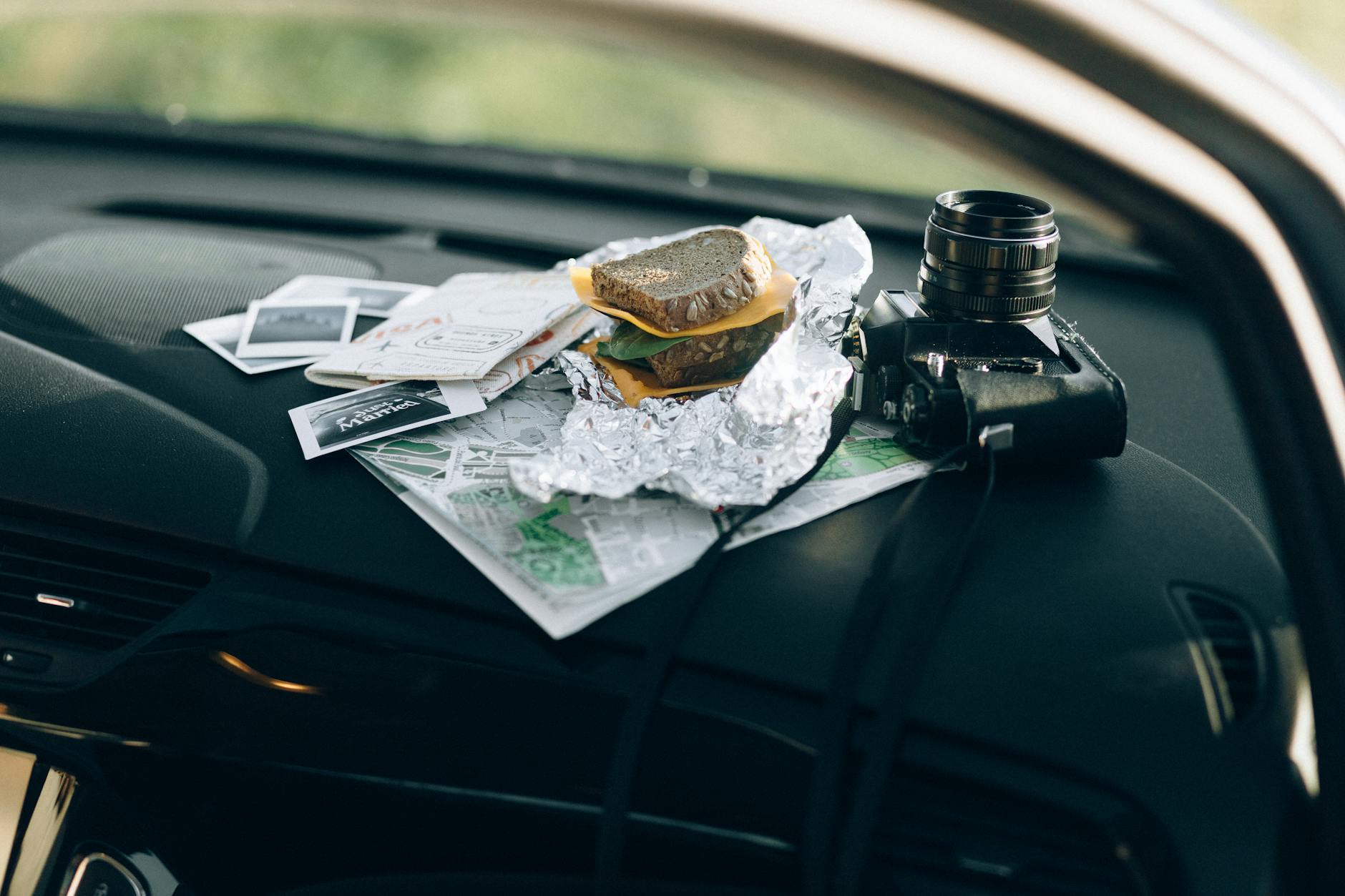
Every car had one. Stuffed into the glove compartment, folded badly, and almost certainly out of date — the road map was as standard a piece of American driving equipment as the steering wheel itself. And unlike the steering wheel, nobody was ever quite sure how to use it properly.
For most of the twentieth century, navigating the American road network was a skill. Not a technical skill, exactly, but a practiced one — a combination of spatial reasoning, landmark recognition, and a willingness to ask strangers for help when things went sideways. Which they often did. Getting lost wasn't a failure state. It was a routine feature of driving somewhere unfamiliar.
Today, the idea of leaving for a road trip without turn-by-turn GPS feels almost reckless. Most drivers under 35 have never navigated by paper map in any meaningful way. And something about that shift — quiet, gradual, and almost total — is worth pausing on.
How Navigation Actually Worked
Before GPS became a consumer reality in the early 2000s, American drivers had a layered system for finding their way. At the foundation was the road map — either a state map picked up free at a gas station, a spiral-bound road atlas, or a AAA-issued TripTik, which was the premium option.
The TripTik was a genuine piece of pre-trip engineering. You'd call or visit your local AAA office, describe your route, and a staff member would assemble a custom strip map — a narrow, flip-book-style booklet showing your specific path with handwritten annotations for construction, seasonal road closures, and recommended stops. It was personalized navigation, produced entirely by humans, before computers were involved in the process at all.
For shorter or more spontaneous trips, you worked with what you had. Gas station attendants — who still existed in significant numbers through the 1980s — were a primary source of local routing knowledge. Pull in anywhere in rural America and the person pumping your gas could usually tell you exactly which county roads to take to get where you were going, what the road conditions were like, and whether the bridge on Route 9 was still out.
This was a distributed, human-powered navigation network. It worked because local knowledge was genuinely local — and people were accustomed to sharing it.
The Map-Reading Was Its Own Negotiation
For families on long drives, navigation was rarely a solo activity. The passenger — typically a parent, spouse, or older sibling — was the designated navigator, tasked with tracking the route on a map while the driver drove. This arrangement had a well-documented failure mode.
Maps, especially large state or regional maps, were difficult to read in a moving vehicle. Refolding them to the relevant section while someone was asking "are we close?" was its own minor physical challenge. Disagreements about which exit to take, whether a turn had been missed, or whose fault the wrong turn was — these were a staple of the American family road trip in a way that GPS has almost entirely eliminated.
There was also the highway sign problem. Before GPS, highway signage was your primary real-time navigation tool. Signs were sometimes missing, sometimes confusing, and occasionally positioned in ways that gave you approximately four seconds to decide whether to take an exit before it was too late. Miss it, and you were looking for the next opportunity to turn around — which on a rural interstate might be five miles away.
None of this was smooth. But it produced something that GPS navigation implicitly removes from the experience: active engagement with your surroundings. You were watching for landmarks, reading signs, building a mental map of where you were in relation to where you were going. You were, in a meaningful sense, navigating — not just following instructions.
What GPS Changed (Beyond the Obvious)
The consumer GPS revolution happened in stages. Dedicated devices — Garmin, TomTom, Magellan — became widely affordable in the mid-2000s and spread quickly. Then smartphones arrived, and Google Maps turned every phone into a navigation system more capable than anything that had existed before. By the early 2010s, the paper map was effectively obsolete for most American drivers.
The practical gains were enormous and undeniable. Real-time traffic rerouting alone has saved millions of hours of commute time. The cognitive load of navigation — the mental energy required to track your position, anticipate turns, and recover from wrong turns — dropped to near zero. Driving became genuinely easier.
But something else shifted too, more subtly. Research on spatial cognition suggests that GPS reliance is associated with reduced development and use of the hippocampus — the brain region most involved in spatial navigation. In plain terms: the less you navigate, the less capable at navigation you become. A generation of drivers who have never had to build a mental map of a city may be accumulating a kind of spatial debt that's hard to measure but probably real.
There's also the texture of the experience. Getting lost used to mean something. A wrong turn in an unfamiliar city could lead to a neighborhood you'd never have found otherwise, a diner that became a family legend, or simply the discovery that the area around your destination was more interesting than the destination itself. Serendipity was a structural feature of pre-GPS travel, not an accident.
Now, the most efficient route is the only route. You arrive faster, more reliably, and with no particular story to tell about how you got there.
A Navigation System That Never Needed Charging
The folded map in the glove box was imperfect in almost every way. It tore. It went out of date. It couldn't account for traffic or road closures. It required effort and attention and occasionally produced arguments at 70 miles per hour.
But it also asked something of the driver that GPS does not: that you pay attention to where you are. That you develop a relationship with the landscape. That you participate in the act of finding your way rather than simply receiving instructions.
Most of us wouldn't trade the satellite back for the paper map. The convenience gap is too wide. But it's worth acknowledging that when we handed navigation over to a device, we also handed over something less tangible — the particular kind of competence that comes from occasionally, genuinely not knowing where you are.
Sometimes the wrong turn was the whole point.