Your Parents' Wedding Cost a Semester of College. Yours Cost a Semester at Harvard.
The $2,000 Celebration That Became a $35,000 Production
Susan Miller got married in 1982 in the fellowship hall of her Methodist church in Columbus, Ohio. Her dress came from JCPenney for $89. The reception featured ham sandwiches, potato salad, and a sheet cake from the local bakery. Her aunt played piano during the ceremony. Total cost: $1,847, including the honeymoon weekend at a cabin in Hocking Hills.
 Photo: Hocking Hills, via th-test-11.slatic.net
 Photo: Columbus, Ohio, via resource.nationtv.tv
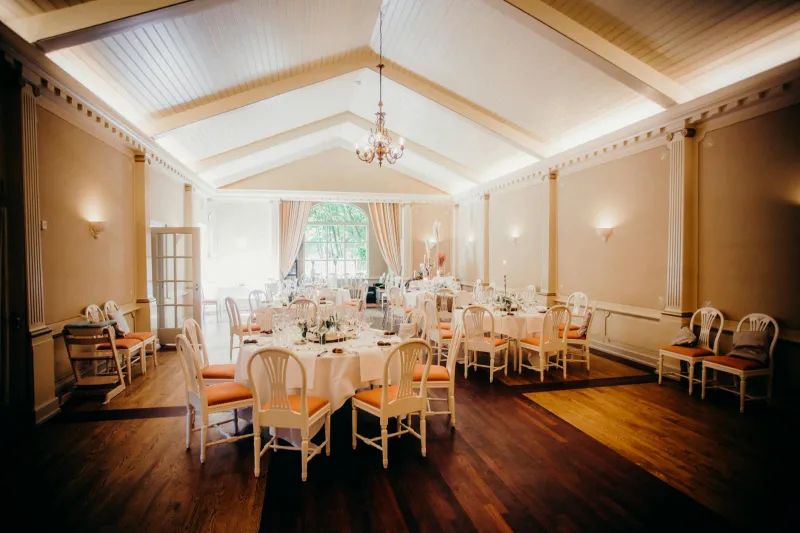
Her daughter Jessica got married last summer. The venue alone—a restored barn an hour outside the city—cost $8,500. The photographer charged $4,200 for eight hours of coverage. The florist's bill hit $3,800 for arrangements that would be thrown away the next morning. Jessica's dress, from a boutique specializing in bridal wear, cost more than her mother's first car.
Final tally: $42,000, not including the honeymoon in Costa Rica that they put on credit cards.
 Photo: Costa Rica, via lp-cms-production.imgix.net
What happened? How did a one-day celebration transform from a modest family gathering into a financial milestone that rivals buying a house?
When Weddings Were Celebrations, Not Productions
In 1980, the average American wedding cost $5,000 in today's dollars. The typical celebration involved a church ceremony, a reception in the church basement or a local hall, and a honeymoon that might be a long weekend at a nearby resort. The bride's family usually paid, but the amounts were manageable—roughly equivalent to what a middle-class family might spend on a nice vacation.
Most importantly, weddings were celebrations, not performances. The goal was to mark the beginning of a marriage, not to create an Instagram-worthy spectacle or demonstrate the couple's taste and financial status. People understood that the marriage mattered more than the wedding, and they planned accordingly.
Photography meant hiring someone local for a few hours to capture the ceremony and some family portraits. Flowers came from the garden or the grocery store florist. Music was provided by a friend with a guitar or the church organist. The cake was often homemade or ordered from the neighborhood bakery.
The Wedding Industrial Complex
Today's average wedding costs $35,000, according to The Knot's annual survey. But that number masks significant regional variations and doesn't include the true cost of what weddings have become. In major metropolitan areas, $50,000 to $70,000 weddings are common, and $100,000+ celebrations are no longer shocking.
The transformation began in the 1990s when the wedding industry discovered that couples would pay premium prices for services marketed as "once-in-a-lifetime" experiences. Suddenly, every aspect of the celebration needed a specialist: wedding planners, floral designers, lighting technicians, videographers who create "cinematic experiences," and caterers who craft "culinary journeys."
The venue became the centerpiece of this new approach. Instead of community halls and church basements, couples began seeking "destination" locations—restored barns, historic mansions, vineyard estates, and beachfront resorts. These venues don't just provide space; they sell an aesthetic, a story, a backdrop for the perfect photos.
The Pinterest Effect
Social media accelerated the trend toward wedding extravagance. Pinterest boards filled with "inspiration" photos created new expectations for every detail, from hand-lettered signage to elaborate dessert tables. Instagram made every wedding a potential showcase, judged not just by the people who attended but by everyone in the couple's social network.
The result is what sociologists call "competitive consumption"—spending driven not by personal preferences but by social comparison. Couples feel pressure to match or exceed the weddings they see online, even when those weddings were staged by professional stylists and photographed by experts.
The Vendor Multiplication
Perhaps most tellingly, the number of vendors involved in a typical wedding has exploded. Susan's 1982 wedding involved maybe six people she had to pay: the minister, the organist, the caterer, the baker, the photographer, and the florist (who was actually her neighbor's sister).
Jessica's wedding required contracts with 14 different vendors: the venue coordinator, the caterer, the bartender, the florist, the photographer, the videographer, the DJ, the lighting designer, the transportation company, the hair stylist, the makeup artist, the wedding planner, the cake designer, and the rental company for linens and specialty furniture.
Each vendor represents a separate business relationship, a separate negotiation, and a separate bill. The complexity alone drives up costs, but it also transforms the wedding from a family celebration into a logistical operation requiring professional management.
The Debt That Follows
The most sobering aspect of modern wedding costs is how couples finance them. In 1980, most weddings were paid for in cash, often by the bride's parents as a traditional gift to launch the new marriage. Today, 73% of couples take on debt to pay for their weddings, according to a recent survey by LendingTree.
The average wedding debt is $15,000, and many couples spend years paying it off. Some take out personal loans with interest rates above 10%. Others use credit cards, turning what should be a celebration into a financial burden that follows them into their marriage.
This debt often delays other life milestones. Couples postpone buying houses, having children, or building emergency funds because they're still paying for a party that happened years earlier. The wedding that was supposed to launch their life together instead constrains their financial future.
What We Bought and What We Lost
Modern weddings are undeniably more elaborate and, in many ways, more beautiful than their 1980s counterparts. Professional photography captures moments that would have been lost forever. Skilled caterers create memorable dining experiences. Talented florists design arrangements that transform spaces into something magical.
But we may have lost something more valuable: the understanding that the wedding is just the beginning, not the pinnacle, of a marriage. When couples spend more on their wedding than they have in savings, when they go into debt for a single day's celebration, when the planning process becomes so stressful that it strains their relationship, the wedding may have defeated its own purpose.
Susan and her husband celebrated their 40th anniversary last year. Their marriage survived job losses, health scares, teenage children, and all the ordinary challenges that test a partnership. They joke that their $1,847 wedding was the best investment they ever made—not because it was cheap, but because it reflected their values and didn't burden their future.
Jessica and her husband are still paying off their wedding two years later. The photos are beautiful, the memories are precious, and their marriage is strong. But they sometimes wonder if they could have started their life together with a little more money in the bank and a little less pressure to create the perfect day.
The question isn't whether couples should have beautiful weddings. It's whether we've convinced ourselves that beautiful means expensive, and whether a celebration that was once about community and commitment has become too much about performance and prestige.