The Slip of Paper in Your Wallet Used to Mean Nothing. Now It Means Everything.
Somewhere in a kitchen junk drawer across America, there's probably a faded receipt from 1987. A grocery run, maybe. Or a hardware store. Milk, bread, a box of nails. The ink has gone pale. The thermal paper has curled at the edges. And if you found it today, it would tell you almost nothing — just that someone, somewhere, bought something for a few dollars.
That receipt was the entire transaction. Once it was printed, the store's interest in you ended.
That era is over.
Cash, Anonymity, and the Forgotten Freedom of Paying in Person
For most of the twentieth century, retail transactions were designed to be ephemeral. You handed over cash. You received goods and change. A receipt was printed — sometimes — and filed away in a shoebox for tax purposes or tossed immediately. The store had no particular reason to remember you. You were a customer, not a data source.
Even when credit cards became more common in the 1970s and 80s, the information flowing back to retailers was limited. The bank knew you'd made a purchase. The store knew you'd paid. But the connection between your identity and your specific buying habits was loose, slow to process, and rarely acted upon in any sophisticated way.
Shopping, in other words, used to be private in a way that felt completely unremarkable — because privacy was the default. Nobody thought of a trip to the drugstore as a traceable event. You walked in, bought what you needed, walked out. The transaction ended at the door.
The Loyalty Card Was the First Crack
If you want to identify the moment when this started to change, the loyalty card program is a reasonable place to start.
In the early 1990s, supermarket chains began rolling out discount card programs. The pitch was simple: sign up, swipe your card, save money on select items. Americans signed up by the millions, because why wouldn't you? A few cents off cereal seemed like a straightforward deal.
What most shoppers didn't fully process was the other side of the exchange. Every time you swiped that little card, the store was building a longitudinal record of your purchases. Not just what you bought, but when, how often, in what quantities, and how your habits shifted over time. Buy antacids every week for a month? The system noted it. Switch from regular soda to diet? Logged. Start buying baby formula? That one was particularly valuable.
Retailers learned quickly that purchase history was a remarkably accurate predictor of life events. Target famously developed a pregnancy prediction model in the early 2000s that could identify likely expectant mothers based on subtle shifts in buying patterns — things like unscented lotion, certain vitamins, and large bags of cotton balls. The model was accurate enough that the company was sending baby-related coupons to women before they'd told their families.
The loyalty card was the first crack in the wall. What came after blew the wall down entirely.
What Your Shopping Cart Knows About You Now
Today's retail data ecosystem makes the loyalty card look quaint. The information collected at the point of sale — or increasingly, well before it — is layered, cross-referenced, and sold through a chain of data brokers that most Americans have never heard of and couldn't name.
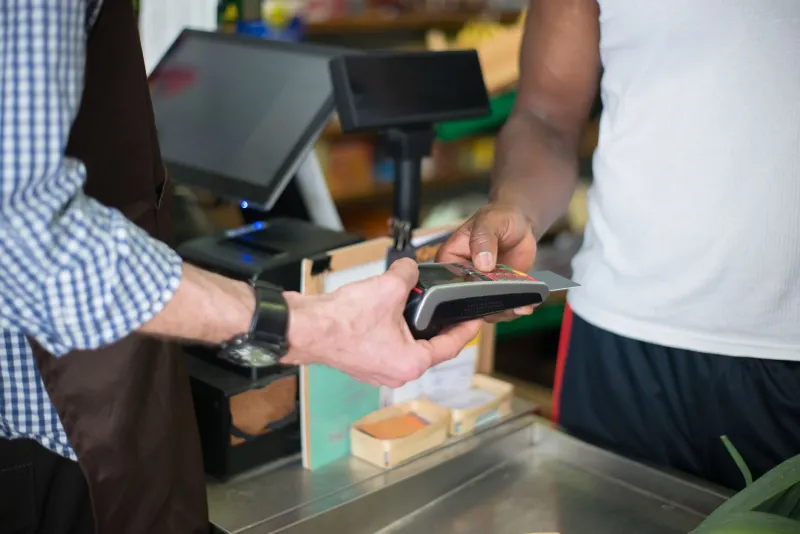
When you use a credit or debit card, your bank records the transaction. The retailer records it too. If the retailer has a loyalty program, that data feeds into a customer profile. If you used a store app to clip digital coupons, your phone's location data may have been collected as well. Did you browse the store's website before driving over? That browsing session has been logged, likely tied to a persistent identifier, and probably shared with third-party advertising networks.
The data brokers who sit in the middle of this ecosystem — companies like Acxiom, Epsilon, and Oracle Data Cloud — aggregate purchase data from hundreds of retailers and cross-reference it with public records, social media behavior, and other commercially available information. The resulting profiles can include income estimates, household size, health conditions inferred from purchases, political leanings, and consumer confidence scores.
Retailers themselves have built sophisticated internal analytics operations. Walmart's data division processes more than a million customer transactions per hour. Amazon knows not just what you bought but what you looked at, how long you hovered over a product, what you put in your cart and then removed, and how your purchasing behavior changes during different life stages.
The Price of Personalization
Some of this is genuinely useful to consumers. Relevant recommendations save time. Fraud detection algorithms protect your accounts. Dynamic pricing — controversial as it is — can surface deals for flexible shoppers.
But the asymmetry of the arrangement is worth sitting with for a moment. The retailer knows a great deal about you. You know almost nothing about what they know, who they've shared it with, or how it's being used. The transaction that used to end at the register now extends indefinitely through a data supply chain that operates largely out of view.
There are also practical consequences that go beyond privacy in the abstract. Insurance companies have explored using purchase data to assess risk. Employers have investigated using consumer profiles in hiring decisions. Credit decisions can be influenced by behavioral data that has nothing to do with your ability to repay a loan.
The receipt in your wallet used to be the end of the story. Now it's closer to the beginning of one — a story being written about you, in databases you'll never see, by companies whose names you don't know.
The Thing You Didn't Know You Were Trading
Nobody sat down in 1993 and agreed to exchange their purchasing privacy for a few cents off a box of crackers. The shift happened incrementally, through interfaces designed to make participation feel like the obvious choice and opting out feel like an inconvenience.
That's not a conspiracy. It's just how these systems were built — optimized for data collection, with consumer convenience as the justification and the real value flowing in a different direction entirely.
The receipt that used to live in your junk drawer and mean nothing has become one of the most revealing documents about who you are. It just doesn't look like one anymore.