Three Pairs of Shoes, Ten Years of Wear: What We Lost When Footwear Became Disposable
There's a photograph in a lot of American family albums from the 1960s and 70s that tells a story nobody planned to document. Look at the feet. A pair of dark leather oxfords. Maybe some worn-in loafers. Shoes that look like they've been somewhere and plan to keep going. Nobody in those photos is wearing their third pair this year. Nobody threw them out because the sole started separating after six months.
That was a different relationship with footwear entirely — and it's worth understanding just how much it's changed.
Built to Be Repaired, Not Replaced
In the postwar decades through the 1980s, buying a pair of shoes was a considered decision. You went to a proper shoe store — not a rack at a big-box retailer — where a salesperson measured your foot with a Brannock device and talked you through the options. Shoes were made from full-grain leather, with welted construction that allowed a cobbler to resole them when the time came. That time came regularly, because the expectation was that you'd keep the shoe, not ditch it.
A good pair of men's dress shoes from the 1970s, properly cared for, could last fifteen to twenty years. Work boots were handed down between brothers. Women's heels were taken to the neighborhood cobbler every couple of seasons. The repair economy around footwear was real, widespread, and completely normal. There was no shame in it. In fact, there was a kind of quiet pride in keeping something going.
The materials made that possible. Leather uppers that developed a patina over time. Rubber soles thick enough to be replaced. Stitching instead of glue. These weren't luxury items — they were just how shoes were made.
When the Factory Moved and the Quality Followed It Out the Door
The shift started gradually in the late 1980s and accelerated through the 90s. American manufacturing moved offshore, and the economics of footwear production changed dramatically. Labor costs dropped. Volume went up. And the pressure to hit lower retail price points pushed manufacturers toward cheaper materials and faster construction methods.
Glued soles replaced stitched ones. Genuine leather gave way to bonded leather — essentially leather dust pressed together — and then to synthetic materials that look convincing on a shelf but breathe poorly and break down quickly. The concept of resoling became largely irrelevant because the shoes weren't built with it in mind. Why design for repair when the whole model depends on replacement?
By the 2000s, the average American was buying more pairs of shoes per year than ever before in history. Today, the U.S. footwear market sells roughly 2.5 billion pairs annually. That's nearly eight pairs per person, per year. In the 1960s, the average American bought roughly two pairs.
Thirty Pairs and Nothing to Wear
Here's the paradox that anyone who's stood in front of an overstuffed closet will recognize: more options have not made us more satisfied. They've made us more anxious.
Fast fashion — and its footwear equivalent — has given us abundance without durability. Sneakers that look fresh for three months and start falling apart by month five. Boots that won't survive a second winter. Sandals that the sole cracks on before summer's even over. The price point feels low until you add up what you've spent replacing the same basic shoe four times in two years.
There's also the psychological churn that fast fashion deliberately cultivates. New colorways drop every few weeks. Collaborations create artificial scarcity. Trend cycles that used to turn over annually now flip every couple of months, engineered by social media and influencer culture to make last season's purchase feel embarrassingly dated. The goal isn't to sell you a shoe. It's to sell you the feeling that you need another one.
The Cobbler Shop Is Almost Gone
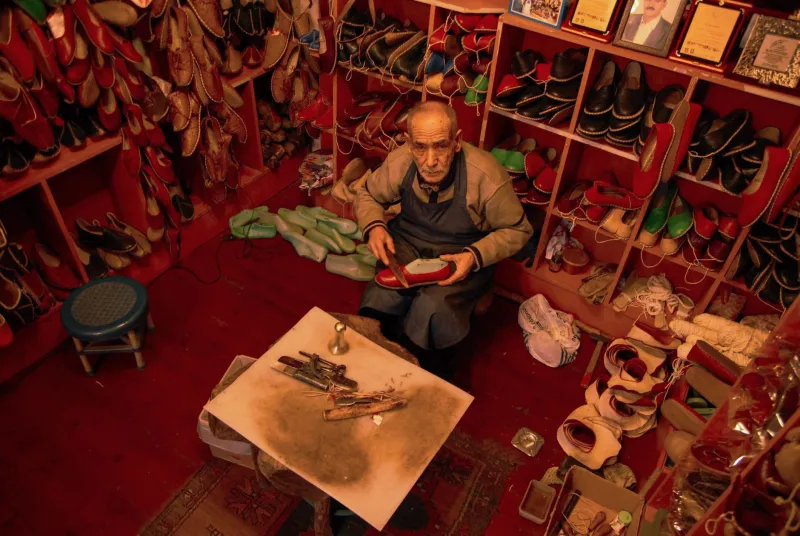
One of the quieter casualties of this shift is the American cobbler. In 1930, there were roughly 120,000 shoe repair shops across the country. Today, estimates put that number somewhere below 7,000 — and the average age of working cobblers is well past retirement territory. The trade isn't being passed down because there isn't enough demand, and there isn't enough demand because most shoes aren't worth repairing.
The few cobblers who remain tend to work on high-end footwear — the $400 leather boots that someone actually wants to save. For the $60 sneaker from a fast-fashion retailer, repair makes no economic sense. The cobbler would charge more than the shoe cost new.
That calculation says everything about what we've traded away.
What a Different Relationship With Shoes Might Look Like
There are signs that some consumers are pushing back. The resale market for quality footwear is growing. Heritage brands that still use Goodyear welt construction — Red Wing, Alden, Tricker's — have developed cult followings among people who've done the math and realized that one $300 pair worn for a decade beats ten $80 pairs bought and discarded over the same period.
The sustainability conversation is slowly making its way into how people think about shoes, too. A shoe that lasts ten years has a fundamentally different environmental footprint than one that ends up in a landfill after two seasons. Americans discard roughly 300 million pairs of shoes every year, most of which are not recyclable.
Your grandfather didn't need a sustainability argument to buy a shoe that lasted. He just bought the one that was built to. The remarkable thing isn't that he kept his shoes for a decade. It's that we've somehow convinced ourselves that's an unreasonable expectation.