One Ticket, One Fine, One Afternoon. Then America Built a Machine Around It.
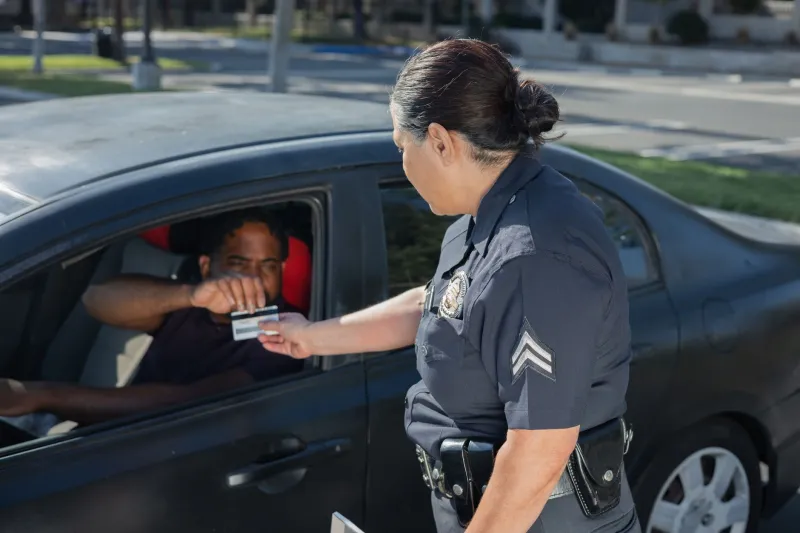
Somewhere around 1962, a man driving a Ford Fairlane a little too fast through a small Ohio town got pulled over, accepted a ticket with a nod, and drove to the county clerk's office the following Tuesday. He paid $15 in cash. The clerk stamped a ledger. That was it. The story was over before the week was.
 Photo: Ford Fairlane, via www.beverlyhillscarclub.com
That same scenario today — same stretch of road, same lead foot — would trigger a sequence of events that could cost the driver anywhere from $800 to several thousand dollars over the next three years, all from a single moment of inattention. Nothing about the driving changed. Everything around it did.
When a Fine Was Just a Fine
For most of the 20th century, traffic enforcement in America was intensely local. Jurisdictions set their own fines, kept their own records, and operated largely in isolation from one another. Getting caught speeding in one county had almost no bearing on what happened in the next one. The idea that a minor infraction could travel across state lines, land in a central database, and be read by an insurance underwriter months later would have sounded like science fiction.
Fines were modest and deliberately so. They were designed to sting just enough to change behavior, not to function as a revenue stream or a trigger for secondary consequences. A speeding ticket in the postwar decades cost roughly the equivalent of a few hours' wages for a working adult — inconvenient, a little embarrassing, and quickly forgotten.
The officer who wrote the ticket was often from the town where you lived. The judge who heard disputes was sometimes someone your family knew. Enforcement was human in scale, and the penalties reflected that.
The Infrastructure That Changed Everything
The shift didn't happen overnight. It built quietly through the 1970s and 1980s as states began linking their motor vehicle databases, sharing records, and creating the foundations of what would eventually become a nationwide tracking system. The Interstate Commerce of driving violations — once unthinkable — became routine.
By the 1990s, most states had adopted point systems: structured frameworks that assigned numerical values to different infractions and triggered automatic consequences once a driver crossed certain thresholds. Lose too many points and your license gets suspended. Accumulate them fast enough and the state decides you're a risk worth removing from the road.
The logic was reasonable. The effect was a fundamental transformation in what a traffic stop actually meant.
Enter the Insurance Algorithm
The piece that most drivers underestimate — the one with the longest financial tail — isn't the state fine. It's the insurance premium adjustment that follows.
Today, insurance companies routinely access Motor Vehicle Records as part of their underwriting process. A single speeding conviction — not an accident, not a DUI, just going 12 miles over the limit on an empty highway — can raise a driver's annual premium by anywhere from 20 to 30 percent, depending on the carrier, the state, and the driver's existing profile. That increase typically lasts three years. Sometimes five.
Do the math on a driver paying $1,400 a year in premiums. A 25 percent surcharge adds $350 annually. Over three years, that's more than $1,000 in additional costs — all traced back to one Tuesday afternoon and one moment of a slightly heavy right foot.
Some states pile on further with mandatory surcharges that operate separately from fines. New Jersey, for example, has a Driver Responsibility Program that can add hundreds of dollars in annual fees on top of the original penalty. The fine you pay at the courthouse is almost beside the point.
The Automation Nobody Voted For
There's something worth sitting with in how invisible this system is to most people. No one campaigned on the promise of algorithmic insurance penalties. No public debate resolved the question of how long a minor infraction should follow a driver. The machinery just assembled itself — piece by piece, database by database — and became the water everyone swims in.
A 1955 driver knew exactly what a ticket cost. He could hold the number in his head. Today's driver often doesn't find out the full cost until a renewal notice arrives months later with a number that doesn't quite make sense until they remember that afternoon in March.
Speed cameras and red-light cameras added another layer. In cities that use them, there's no officer, no interaction, no moment of human judgment. A photograph gets taken, a database gets queried, and a notice arrives in the mail. The process is efficient. It is also entirely impersonal in a way that feels new — and not entirely comfortable.
What Got Lost
This isn't really an argument for going easy on dangerous drivers. Speed limits exist for good reasons, and holding people accountable for breaking them is legitimate. But there's a meaningful difference between accountability and an automated financial penalty structure that compounds quietly for years.
The old system had obvious flaws — it was inconsistent, sometimes corrupt, and wildly variable depending on where you lived and who you knew. A wealthier driver in a friendly county fared much better than a stranger passing through.
But the new system has its own blind spots. It treats a momentary lapse the same as a pattern. It punishes through mechanisms the driver never directly engages with. And it often hits hardest the people who can least afford a surprise rate hike — lower-income drivers for whom a 25 percent insurance jump isn't an inconvenience but a genuine financial crisis.
The road is safer than it's ever been. The traffic stop, on the other hand, is a much bigger deal than it used to be. That's worth knowing the next time you're running a little late and the speedometer drifts past the limit.
Some things that look simple on the surface have a lot more going on underneath. A ticket used to be just a ticket. Now it's the beginning of a conversation between systems you'll never see — and that conversation can go on for a long time.