When a Firm Grip Closed the Deal: The Vanishing World of the Handshake Agreement
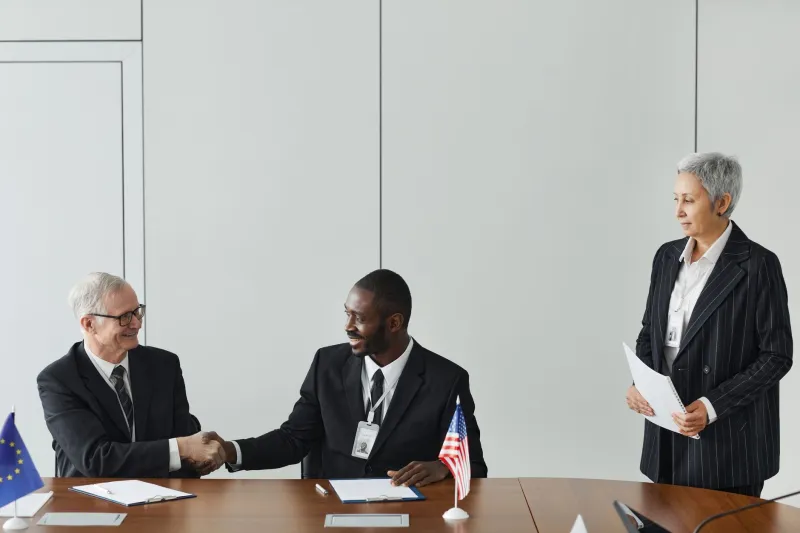
Somewhere in a filing cabinet in rural Ohio, there's probably a property deed from 1952 that took about fifteen minutes to negotiate and was finalized with a handshake and a cup of coffee at a kitchen table. No attorney present. No title company involved. Just two neighbors who knew each other's families, understood the value of their word, and had enough social skin in the game that breaking a promise wasn't just a legal risk — it was social suicide.
That world is almost entirely gone. And most Americans under forty have no idea it ever existed.
A Deal Was a Deal
In mid-20th century America, handshake agreements weren't a quaint tradition reserved for small-town folklore. They were the operating system of everyday commerce. Farmers bought equipment on a spoken promise to pay after harvest. Contractors started jobs before a single document was signed. Local businessmen extended credit to customers whose faces they knew better than their credit scores — because credit scores didn't exist yet. What existed instead was something arguably more powerful: community accountability.
If you shook on something and then walked away from it, word traveled fast. Your reputation — at the hardware store, at church, at the barbershop — took a hit that no bankruptcy filing could wipe clean. The social cost of breaking your word was real and lasting. That informal enforcement mechanism kept a remarkable amount of American commerce running on nothing more than mutual trust and a firm grip.
Real estate deals, business partnerships, even employment arrangements were routinely sealed this way. Oral contracts were legally recognized in most states (and still are, in limited circumstances), but the point was that most people never needed to invoke the law. The social contract was enough.
When Did We Stop Trusting Each Other?
The shift didn't happen overnight, and it wasn't the result of one bad actor or one rogue handshake gone wrong. It was gradual — a slow erosion driven by a combination of forces that each made individual sense but collectively dismantled something irreplaceable.
America got more mobile. When people stopped living and dying in the same town where they were born, the tight web of community accountability loosened. You couldn't rely on a man's reputation if you'd never met his father, didn't know his kids, and had no idea whether he'd still be in the county next year. Anonymity crept into commerce, and with it came the need for something more enforceable than a reputation.
Business got bigger, too. The local deal between two known quantities gave way to transactions involving corporations, franchises, and counterparties who existed as legal entities rather than human beings. You can't shake hands with an LLC. You can't appeal to a holding company's sense of community pride. So paper replaced presence, and legal language replaced the spoken word.
And then came the lawyers — not as villains, but as a natural response to a world that had grown too complex and too anonymous for informal trust to carry the load.
The Modern Ritual of Distrust
Consider what it takes to complete a simple transaction today. You want to hire a contractor to renovate your kitchen. Before a single cabinet is touched, you'll exchange multiple emails, review a formal estimate, sign a detailed scope-of-work contract, possibly run a background check, and consult at least one online review platform. The contractor, for their part, carries liability insurance, requires a signed change-order process for anything outside the original agreement, and invoices through an app that timestamps every payment.
None of that is unreasonable. But compare it to your grandfather calling up the guy two streets over, agreeing on a price over the phone, and having him start Monday morning. The job got done. The guy got paid. Nobody felt the need to document every nail.
Today, DocuSign processes millions of agreements every day. Terms and conditions documents for everyday apps routinely run longer than the U.S. Constitution. Legal review periods for routine business agreements stretch into weeks. A simple freelance arrangement can require an NDA, a master services agreement, a statement of work, and a tax form before anyone has done a single hour of actual work.
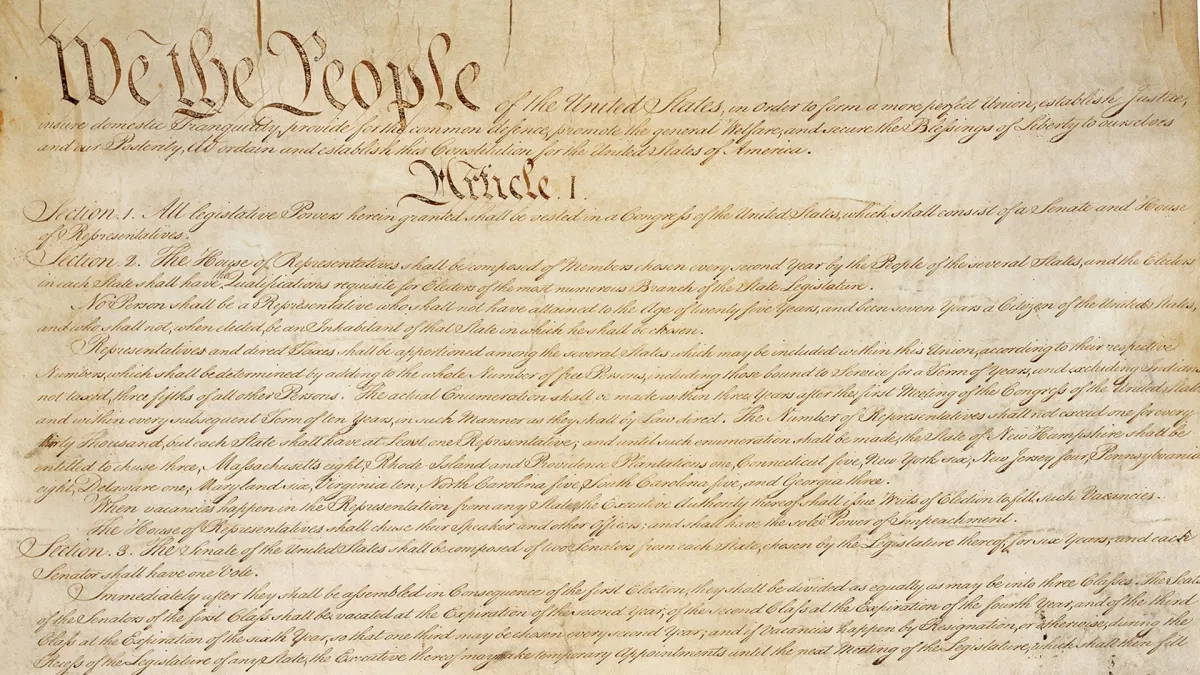 Photo: U.S. Constitution, via cdn.britannica.com
We've built an entire industry — and a genuinely massive one — around the assumption that the person across the table from you cannot be trusted.
What We Actually Lost
It would be naive to romanticize the handshake era without acknowledging its blind spots. That culture of informal trust was largely extended among people who already knew each other — which in mid-century America meant it often excluded people based on race, gender, and class. The old boy network that sealed deals over golf was built on exclusion as much as trust. That part deserved to change.
But something real was lost in the transition, too. There's a dignity in being taken at your word. There's a weight to a promise made face-to-face that no electronic signature can fully replicate. When someone shook your hand on a deal, they were putting their name on the line — not just their signature, but their actual standing in the community.
More practically, the frictionlessness of informal agreements got things done faster, cheaper, and with less anxiety. Small businesses ran on relationships. Neighborhoods functioned on mutual favors and unspoken reciprocity. The overhead of trust was low because the social infrastructure supporting it was strong.
That infrastructure — the tight-knit community, the shared reputation economy, the sense that your word was your most valuable asset — has been quietly dismantled over the past seventy years. We replaced it with contracts, platforms, and legal frameworks that work reasonably well but carry none of the warmth.
The Handshake Wasn't Magic. The Community Behind It Was.
Here's the thing about the handshake deal: it was never really about the handshake. It was about everything surrounding it — the shared history, the mutual stakes, the social consequences of betrayal. The handshake was just the symbol of all that.
We didn't lose the handshake because we got smarter or more sophisticated. We lost it because the world it lived in — tight, local, accountable, interdependent — gradually came apart. The contracts that replaced it aren't a sign of progress so much as a sign of how much distance has opened up between us.
Next time you're clicking through a twenty-page terms and conditions document without reading it, it's worth pausing for a second. Somewhere in there is the ghost of a simpler agreement — one that only needed two people, two eyes meeting, and a hand extended across a table.