Ten Cents, a Tray, and a Hot Meal: The School Lunch That Actually Fed America's Kids
Photo: Steve Shook from Moscow, Idaho, USA, CC BY 2.0, via Wikimedia Commons
Ten Cents, a Tray, and a Hot Meal: The School Lunch That Actually Fed America's Kids
Somewhere around 1958, in a school cafeteria in rural Indiana, a woman named Doris — or maybe Helen, or maybe Ruth — arrived at five-thirty in the morning to start the soup. She'd done it every school day for years. By eleven-thirty, the cafeteria smelled like roasting chicken and warm bread, and several hundred kids would file through a line, pick up a tray, and eat a real meal for a dime.
That scene played out in schools across America for the better part of three decades. And it's almost entirely gone.
The Program That Started With a Purpose
The National School Lunch Program was signed into law in 1946 by President Truman, born from the sobering discovery that a startling number of young men drafted during World War II had been rejected for military service due to malnutrition. The country had looked at its own children and found them underfed. The program was, at its core, a national security investment as much as a social one.
 Photo: National School Lunch Program, via squaremeals.org
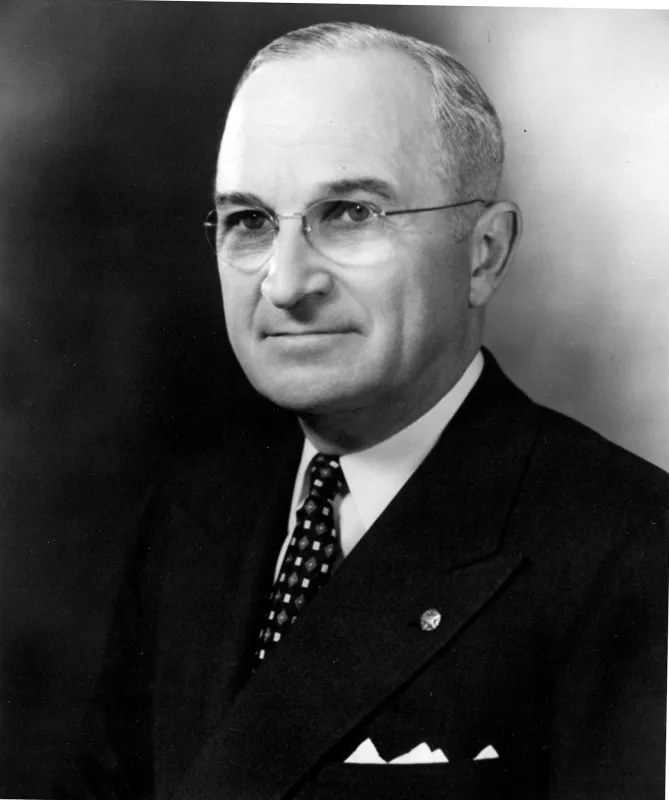 Photo: President Truman, via s3.amazonaws.com
The early model was straightforward: schools received federal commodity foods — surplus agricultural products like butter, cheese, canned vegetables, and beef — and local cafeteria staff turned them into actual meals. The food was cooked on-site, from scratch, by workers who knew how to feed large groups of people efficiently and tastefully. Menus were simple and seasonal. Recipes were practical. The goal was nutrition, and it was achieved with minimal bureaucracy and genuine culinary effort.
For kids from low-income families, the program was often the most reliable meal of the day. For middle-class families, it was a reasonable alternative to packing a lunch. For almost everyone involved, it worked.
What Scratch Cooking Actually Looked Like
The cafeteria workers of the postwar era were, in many ways, unsung figures of American public life. They were largely women, often from the same communities as the children they fed, and they took their work seriously. Meals were planned weekly, ingredients were prepped daily, and the kitchen operated with the kind of disciplined routine you'd find in a short-order diner.
A typical lunch in a well-run 1950s or early 1960s school cafeteria might include a main dish of braised beef or baked chicken, a cooked vegetable, bread made in-house, a piece of fruit, and milk. Not glamorous. Not Instagram-worthy. But genuinely made from recognizable ingredients by people who understood the difference between cooking and reheating.
The cost to families was pennies — often a dime, sometimes a nickel for reduced-price meals, free for the poorest students. The federal reimbursement system covered the gap. For most of its early history, the program operated with a kind of elegant simplicity: real food, real cooks, real kitchens, and a price point that kept almost no child out.
The Long Slide Away From the Kitchen
The transformation didn't happen because anyone decided school food should get worse. It happened because of a series of decisions — each sensible in isolation — that collectively dismantled the scratch-cooking model and replaced it with something almost unrecognizable.
Budget pressures in the 1970s and 1980s pushed schools to look for cheaper ways to feed students. The answer, increasingly, was pre-processed, pre-portioned, centrally produced food that required minimal preparation. Instead of a kitchen staff that cooked, schools began hiring workers who reheated. Industrial food suppliers stepped in to fill the gap, offering products engineered for shelf stability, consistent portion control, and regulatory compliance — not necessarily for flavor or nutrition.
By the 1990s, the competitive foods era had arrived: fast food brands began appearing in school cafeterias. Pizza Hut, Taco Bell, and McDonald's all had school contracts at various points. The reasoning was pragmatic — kids would actually eat it — but the nutritional trade-off was stark. The cafeteria that had once smelled like pot roast now smelled like a food court.
Federal nutrition standards evolved in response, becoming increasingly detailed and prescriptive over the decades. The Healthy, Hunger-Free Kids Act of 2010 brought significant changes to meal requirements — more whole grains, more fruits and vegetables, calorie caps — and while the intentions were sound, the practical effect in many underfunded districts was meals that checked regulatory boxes but satisfied almost no one sitting at the table.
The Debt Crisis Nobody Talks About Enough
Here's a number that should stop you cold: as of recent years, school meal debt across the United States has reached into the hundreds of millions of dollars. Families who can't afford the current price of school lunch — which now averages around $2.50 to $3.00 in many districts — fall behind, and schools are left holding the balance.
Some districts have adopted policies of lunch shaming — giving children with debt a cold sandwich or a reduced meal in front of their peers. Others have thrown away hot lunches in front of students whose accounts were overdrawn. These practices have generated outrage and legislation in several states, but the underlying problem — that the price of a school meal has grown beyond what many families can absorb — persists.
Compare that to the dime-a-day model of the 1950s, when the federal commodity system and lower labor costs kept participation nearly universal. The program that was designed to ensure no child went hungry has, in many communities, become a source of financial stress and social stigma.
What Was Really on That Tray
It would be easy to over-romanticize the old cafeteria. The food wasn't always good. Overcooked green beans and mystery casseroles were real. Some school kitchens were better than others, and quality varied enormously by region and district.
But the underlying model — locally prepared, scratch-cooked food served by people who worked in the same community — had something the modern system often lacks: a human scale. The woman who made the soup knew the kids eating it. She lived in the neighborhood. She had opinions about whether the bread had risen properly. The meal existed within a web of local accountability and genuine care that no federal nutrition guideline can fully replicate.
The National School Lunch Program still feeds roughly 30 million children every school day. That's an extraordinary achievement, and the logistical complexity of doing so shouldn't be understated. But somewhere between the commodity surplus kitchens of 1948 and the reheated chicken patties of today, the program lost something essential — the idea that feeding children well was a craft worth doing properly, not a compliance problem to be managed cheaply.
Doris would have known the difference. She could smell it from the parking lot.