We Used to Sit Still for Twenty Minutes Without Falling Apart. Now We Can't Wait for a Microwave.

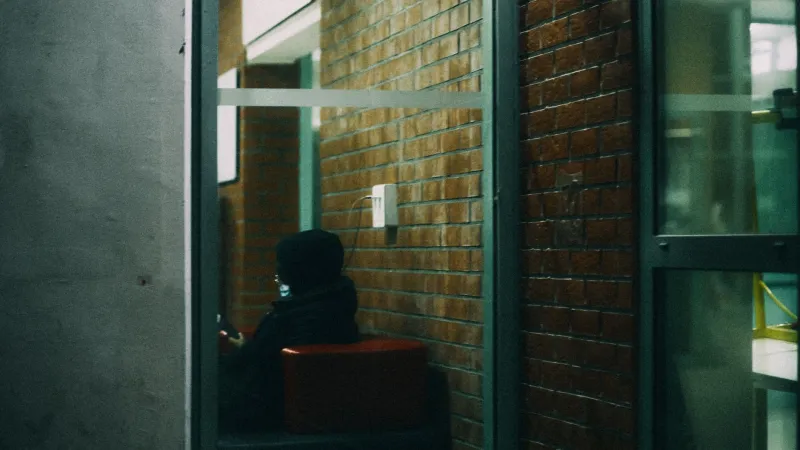
Picture a doctor's waiting room in 1987. Beige walls. Chairs bolted together in rows. A low table covered in magazines — a People from three months ago, a Field & Stream nobody asked for, a Reader's Digest with the crossword already half-done by a stranger. The TV in the corner plays a soap opera with the volume turned low.
And people just... sat there. They read the outdated magazine. They stared at the ceiling. They struck up awkward conversations with the person next to them about nothing in particular. They waited, and they were okay.
Now think about what happens in that same waiting room today.
The Skill Nobody Knew Was a Skill
Boredom used to be a normal part of daily life. Not a problem to be solved — just a texture of existence, like traffic or weather. You stood in line at the grocery store and thought about nothing. You sat through a long car ride and watched the landscape go by. You waited for your name to be called and let your mind wander wherever it wanted to go.
Psychologists now have a name for this: mind-wandering, and it turns out it does something important. When your brain isn't focused on a task, it shifts into what's called the default mode network — a state associated with self-reflection, creative thinking, memory consolidation, and emotional processing. In other words, the idle moments you used to fill with staring into space were actually doing quiet, essential work.
Nobody called it a wellness practice. It was just called sitting in a waiting room.
Then the Phone Arrived
The smartphone didn't create anxiety. But it did something sneaky: it made discomfort optional. Or at least, it made discomfort feel optional, which turns out to be almost as consequential.
The moment a line felt long or a wait felt tedious, the phone offered an exit. Scroll through something. Check your messages. Watch a video. The friction of idle time could be eliminated instantly, and the brain — which is wired to seek stimulation — took the offer every single time.
The problem is that avoiding discomfort and building tolerance for discomfort are opposites. Each time we reached for the phone to escape a moment of boredom, we made the next moment of boredom slightly harder to tolerate. Over time, the threshold dropped. Now a two-minute wait for a microwave feels genuinely irritating. A traffic light that takes forty-five seconds prompts a phone unlock. A moment of quiet in a conversation becomes something to fill immediately.
This isn't a character flaw. It's conditioning. But it's also a real change in how Americans experience time.
The Notification Layer
Here's what makes the modern waiting room genuinely different from its 1987 version: it's not just that we're distracted. It's that the distraction actively generates new anxiety.
You sit down in the waiting room and pull out your phone to pass the time. Within thirty seconds, you've seen a news alert that upset you, a work email that technically could wait but now can't, a social media notification that pulls you into a minor social calculation, and an ad for something you mentioned out loud yesterday that now feels vaguely surveillance-adjacent.
You arrived at the waiting room mildly bored. You leave it mildly stressed. And you spent the entire wait in a state of fractured, shallow attention that gave your brain no recovery time at all.
The old waiting room, with its stale Reader's Digest and its muted soap opera, was actually doing you a small favor. It gave you nothing urgent to respond to. It let your nervous system idle.
What Younger Generations Are Navigating
For anyone who grew up before smartphones, there's at least a memory of what comfortable waiting felt like. It's retrievable, even if it takes effort.
For people who grew up with a phone in their hand from age ten or eleven, that baseline may never have been established in the same way. Research from the American Psychological Association has consistently found higher rates of anxiety among younger adults, and while the causes are complex and multiple, the inability to tolerate unstructured downtime is increasingly cited as a contributing factor.
Therapists now teach distress tolerance as an explicit skill — the ability to sit with an uncomfortable feeling without immediately acting to relieve it. The fact that this needs to be taught, formally, in clinical settings, says something about how far the baseline has shifted.
Sitting Still as a Radical Act
There's a quiet movement pushing back. Mindfulness, meditation, and digital detox retreats are all, at their core, attempts to recover the thing the waiting room used to give us for free: unstructured time with nothing to do and no way to escape it.
People pay for silent retreats. They download apps to limit their screen time. They read books about the importance of doing nothing. The irony is thick — we're using technology and commerce to try to recapture a state that used to happen naturally while waiting for a dentist to call our name.
The 1987 waiting room didn't ask anything of you. It just gave you twenty minutes to be quietly bored, and your brain quietly sorted itself out.
That might be worth more than we realized when we replaced it with seventeen notifications and a news cycle that never stops.