We Abolished Boredom and Now We Can't Think Straight
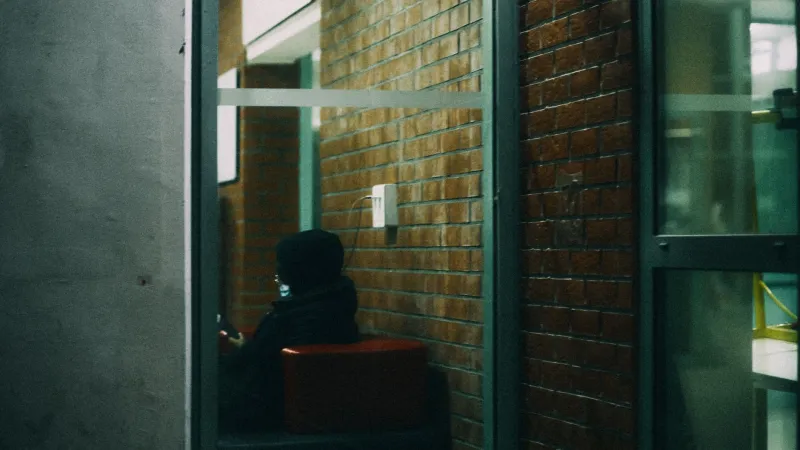
Think about the last time you were genuinely, uncomfortably bored. Not tired. Not distracted. Actually bored — sitting with nothing to do and no screen to reach for. Waiting in a line without pulling out your phone. Riding in a car with the radio off. Sitting in a doctor's waiting room staring at the wall.
For most people under 40, that experience is almost impossible to reconstruct. We've engineered boredom out of daily life so completely that the absence of stimulation now feels like a malfunction rather than a natural state.
But here's the uncomfortable question: what if boredom was actually doing something important?
The Waiting Room That Didn't Have Wi-Fi
As recently as the late 1990s, idle time was simply part of American life. You waited at the DMV with a magazine from three months ago. You sat in the school pickup line with nothing but your own thoughts. Long car trips meant watching telephone poles pass or playing license plate games with your kids. Commuters on the subway stared into the middle distance or read a paperback.
Nobody called this productive. It was just... time that passed. And in that passing, something was happening that we didn't have the language to describe yet.
Neuroscientists now call it default mode network activation — the brain state that kicks in when you're not focused on any specific task. It's associated with memory consolidation, creative problem-solving, empathy development, and what researchers describe as self-referential processing: the mental work of figuring out who you are and what you actually want. In plain terms, it's the state your brain enters when you let your mind wander.
For most of human history, people wandered mentally all the time. They had no choice.
The Smartphone Closed the Gap
The iPhone launched in 2007. By 2012, smartphone adoption in the United States had crossed 50 percent. By 2018, it was above 80 percent. The change happened fast enough that we never really paused to assess what we were replacing.
What we replaced was the gap. Every small pocket of unstructured time — the three minutes waiting for coffee, the twenty-minute train ride, the commercial break, the moment before sleep — got filled. Not with something we consciously chose, but with whatever the app surfaced next. A video. A notification. A scroll through images of people we half-know living lives we half-envy.
None of it is inherently evil. But the cumulative effect is that the default mode network rarely gets to run. The mental wandering that used to happen automatically now has to be deliberately scheduled — which, for most people, means it doesn't happen at all.
What the Research Actually Says
The science here isn't speculative. A 2014 study published in Science found that a significant number of participants — particularly men — preferred administering mild electric shocks to themselves over sitting alone with their thoughts for fifteen minutes. The researchers described the finding as remarkable: people found unstructured mental time so uncomfortable that they actively chose physical discomfort to avoid it.
Separate research from the University of Virginia and Harvard found that mind-wandering during low-demand tasks was strongly associated with creative insight — the kind of non-linear thinking that produces novel solutions to problems. A 2019 study in Psychological Science found that boredom specifically increased creative ideation, apparently because the discomfort of having nothing to do motivates the brain to generate its own stimulation.
Then there's the attention research. Dr. Gloria Mark at UC Irvine has spent years studying workplace attention and found that after a digital interruption, it takes an average of 23 minutes to return to the original task at full concentration. We interrupt ourselves dozens of times a day. The math is brutal.
What Children Lost First
The generation growing up entirely within the smartphone era has never known a childhood with genuine unstructured boredom. Pediatric and developmental psychologists have raised consistent alarms about this.
Unstructured play — the kind that emerges specifically when kids have nothing to do — is now understood to be critical for executive function development, emotional regulation, and social cognition. The bored child who eventually invents a game, builds something from scraps, or works through a conflict with a sibling is developing capacities that scheduled, screen-mediated activity simply doesn't build.
The American Academy of Pediatrics has published guidelines emphasizing unstructured play time. But in practice, most American children move from school to organized activities to screens with very little genuine idle time in between. Boredom, once an unavoidable feature of childhood, has become something parents actively work to prevent — often with the best intentions.
The Attention Economy Doesn't Want You Idle
None of this is accidental, and that's the part worth sitting with. The apps competing for your idle moments are built by some of the most sophisticated behavioral scientists and engineers in the world. They are explicitly designed to be more compelling than your own thoughts — to win the competition for your attention every single time a quiet moment opens up.
The business model requires it. An idle mind that never reaches for a phone generates no ad revenue, no engagement data, no behavioral profile. The attention economy is, structurally, an economy built on the elimination of boredom. Your restlessness is the product.
Making Peace With the Pause
None of this means smartphones are purely harmful or that we should return to staring at walls. But there's a real cost to having permanently closed the gap — and most of us feel it even if we can't name it. The low-grade anxiety. The difficulty sustaining focus. The sense that your thoughts scatter the moment you try to hold them still.
The boring car ride, the quiet waiting room, the evening with nothing on — these weren't failures of entertainment. They were the conditions under which a certain kind of thinking became possible. The thinking that turns a problem over slowly. The thinking that remembers what actually matters. The thinking that, given enough space, occasionally comes up with something genuinely new.
We traded all of that for an infinite scroll. And we did it so gradually that nobody thought to ask whether it was a good deal.