Before the Playlist Knew You Better Than You Knew Yourself, There Was a DJ With a Gut Feeling
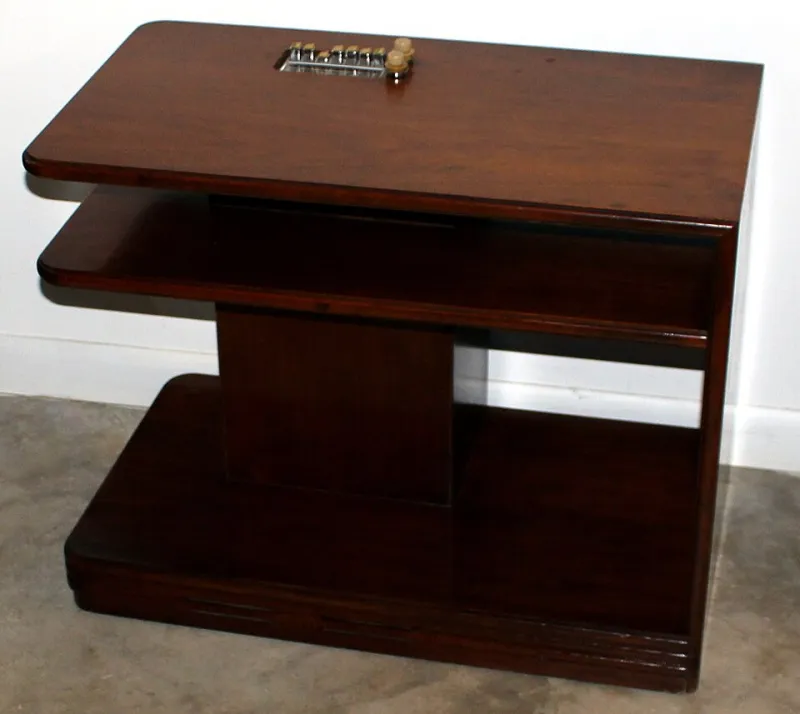
Photo: Joe Haupt from USA, CC BY-SA 2.0, via Wikimedia Commons
There's a specific kind of memory that a lot of Americans over thirty carry around without quite realizing it. You're in a car — maybe your parents' station wagon, maybe your first beat-up Honda — and a song comes on the radio that you've never heard before. Within about thirty seconds, something clicks. You don't know the artist, you don't know the title, you don't know anything about it yet. But you know you need to hear it again.
You couldn't skip it. You couldn't save it. You couldn't add it to a playlist. All you could do was listen, and maybe catch the DJ's back-announce if you were lucky enough to be near a pen and paper. And then you spent the next week hoping it would come on again.
That experience — passive, accidental, slightly desperate — was how most Americans discovered music for the better part of a century. And for all its inefficiencies, it produced something that no recommendation engine has managed to replicate: a genuinely shared national soundtrack.
The DJ as Cultural Gatekeeper
The golden age of American radio, roughly spanning the late 1950s through the 1990s, was built on a surprisingly human system. A relatively small number of disc jockeys, program directors, and regional radio stations decided what the country heard. That sounds like a recipe for conformity — and it sometimes was — but it also meant that when a song broke through, it broke through everywhere at once.
Consider what that actually meant. On any given Friday afternoon in 1977, a kid in Memphis and a kid in Minneapolis and a kid in suburban New Jersey might all be hearing the same new Fleetwood Mac track for the first time, on their local station, within hours of each other. They had no way of knowing this. But the shared experience was real, and it had consequences.
It meant that on Monday at school, music was a common language. Not because everyone had the same taste — they didn't — but because everyone had been exposed to the same pool of music. You might love what your classmate hated, but you'd both heard it. That shared exposure created the conditions for genuine cultural conversation in a way that today's fragmented listening landscape simply doesn't.
The Luck of the Dial
Radio discovery was fundamentally accidental, and that accident was generative in ways that are easy to underestimate.
When you're scrolling a streaming platform, every choice is yours. The algorithm suggests based on what you've already liked; you accept or reject. The entire system is designed to reduce friction, to get you to something familiar-feeling as fast as possible. It's optimized for satisfaction. What it's not optimized for is surprise.
The radio dial offered no such guarantees. You twisted it looking for something and found something else entirely. You were a captive audience in your car, and the DJ had twelve minutes before the next commercial break to take you somewhere you hadn't planned to go. Sometimes it was annoying. Sometimes it was revelatory. A significant portion of the music that people describe as life-changing — the song that made them feel understood, the track that opened a door to a whole genre they hadn't known existed — arrived not because they sought it out but because they couldn't change the station fast enough.
That friction was, paradoxically, a feature.
Regional Radio and the Sound of Where You Were
One of the things that's genuinely gone from American listening culture is the sense of musical place. Regional radio stations didn't just play national hits — they championed local artists, reflected local tastes, and created sounds that were distinctly tied to geography. The Chicago blues stations sounded different from the country stations in Nashville, which sounded different from the soul stations in Detroit, which sounded different from the Top 40 stations in Los Angeles.
This wasn't just aesthetically interesting. It meant that music was connected to physical location in a meaningful way. Growing up in a particular city meant being shaped by a particular sonic environment. The music you absorbed wasn't chosen by an algorithm that knew your listening history — it was chosen by a program director who knew your city.
Streaming platforms are, by design, placeless. Spotify sounds the same in Tulsa as it does in Boston. The recommendations you receive are based on your behavioral data, not your geography, your community, or your local culture. That's enormously convenient. It's also a quiet erasure of something that once made American music culture genuinely diverse in a regional sense.
What the Algorithm Got Right — and What It Missed
It would be dishonest to romanticize the old system without acknowledging its real limitations. Radio gatekeeping was often racially biased, systematically underpromoting Black artists in mainstream markets for decades. Payola scandals revealed that the "gut feeling" of many program directors was actually the result of record label payments. And the sheer repetition of Top 40 radio — hearing the same twelve songs in rotation for weeks — was genuinely maddening in a way that on-demand listening has mercifully ended.
Streaming gave listeners something they'd always wanted: total control. And the algorithms that power those platforms are, in a narrow technical sense, extraordinarily good at their job. Spotify's Discover Weekly has introduced people to artists they genuinely love. The data is real.
But optimization for individual preference comes with a cost that only becomes visible at the cultural level. When everyone is listening to a perfectly tailored personal soundtrack, nobody is listening to the same thing. The shared reference points that once made music a social glue — the song everyone heard on the drive home Friday, the album that defined a particular summer for an entire generation — are increasingly rare. Music is more accessible than it has ever been in human history, and somehow it feels less communal than it did when you were arguing with your brother over who got to control the car radio.
The Unexpected Legacy of the Guy in the Booth
The DJ didn't know your taste. He didn't have your data. He was working from instinct, industry relationships, and a genuine belief that the people in his broadcast radius would respond to what he was about to play. Sometimes he was wrong. But when he was right, he was right for a million people simultaneously.
That's a different kind of right than the algorithm achieves. The algorithm is right for you, specifically, right now. The DJ was right for a community, and in being right for a community, he was doing something the algorithm was never designed to do: creating the conditions for a shared experience.
The car radio wasn't a perfect music delivery system. It was something more interesting than that. It was a conversation between a person and a place, broadcast at scale — and the music it carried was the soundtrack to a version of American life where you and the stranger in the next lane were, without knowing it, hearing exactly the same thing.