A Stranger's Address and a Sheet of Lined Paper: The Vanished Art of the American Pen Pal
A Stranger's Address and a Sheet of Lined Paper: The Vanished Art of the American Pen Pal
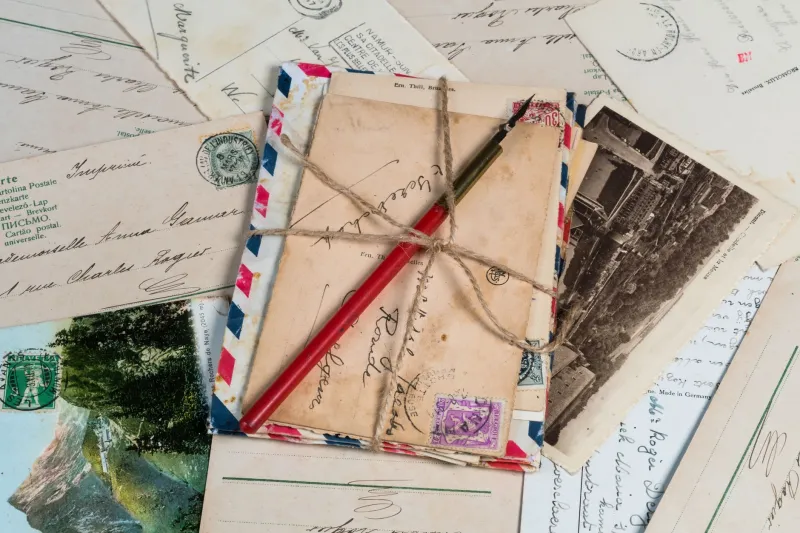
Somewhere in a shoebox in an attic in Ohio, there's probably a bundle of letters tied with kitchen twine. The handwriting on the envelopes is foreign — maybe German, maybe Japanese, maybe from a small town in rural France that the recipient could never quite find on a map. The letters inside are worn soft at the folds from being read and reread over years. The two people who exchanged them may never have met in person. They were pen pals, and for much of the twentieth century, that word described something genuinely meaningful.
Today it sounds almost quaint. We have Instagram, WhatsApp, LinkedIn, and roughly fourteen different ways to message a stranger before breakfast. And yet the particular kind of connection that a handwritten letter between strangers once created — slow, deliberate, patient, and oddly intimate — has essentially vanished from American life. Understanding what it was, and why it mattered, says a lot about what we've traded away in the rush to connect faster.
How It Actually Worked
Pen pal programs in their heyday weren't informal or accidental. They were organized, widespread, and surprisingly well-run. By the 1950s and 1960s, organizations like the International Friendship League and the Student Letter Exchange were matching hundreds of thousands of Americans with correspondents every year. Schools treated it as a legitimate educational activity. Magazines like Seventeen and Boys' Life ran pen pal columns where readers could list their names and interests and wait for letters to arrive. The Girl Scouts had programs. So did the YMCA. Churches ran international correspondence networks. The post office, in some ways, was the original social platform.
 Photo: Girl Scouts, via pbs.twimg.com
 Photo: International Friendship League, via edit.uia.org
The mechanics were simple. You'd submit your name, age, hometown, and a few interests. A few weeks later, you'd receive a name and address on a slip of paper — someone in Wisconsin, or West Germany, or the Philippines — and the rest was up to you. You wrote first. You waited. If they wrote back, something had begun.
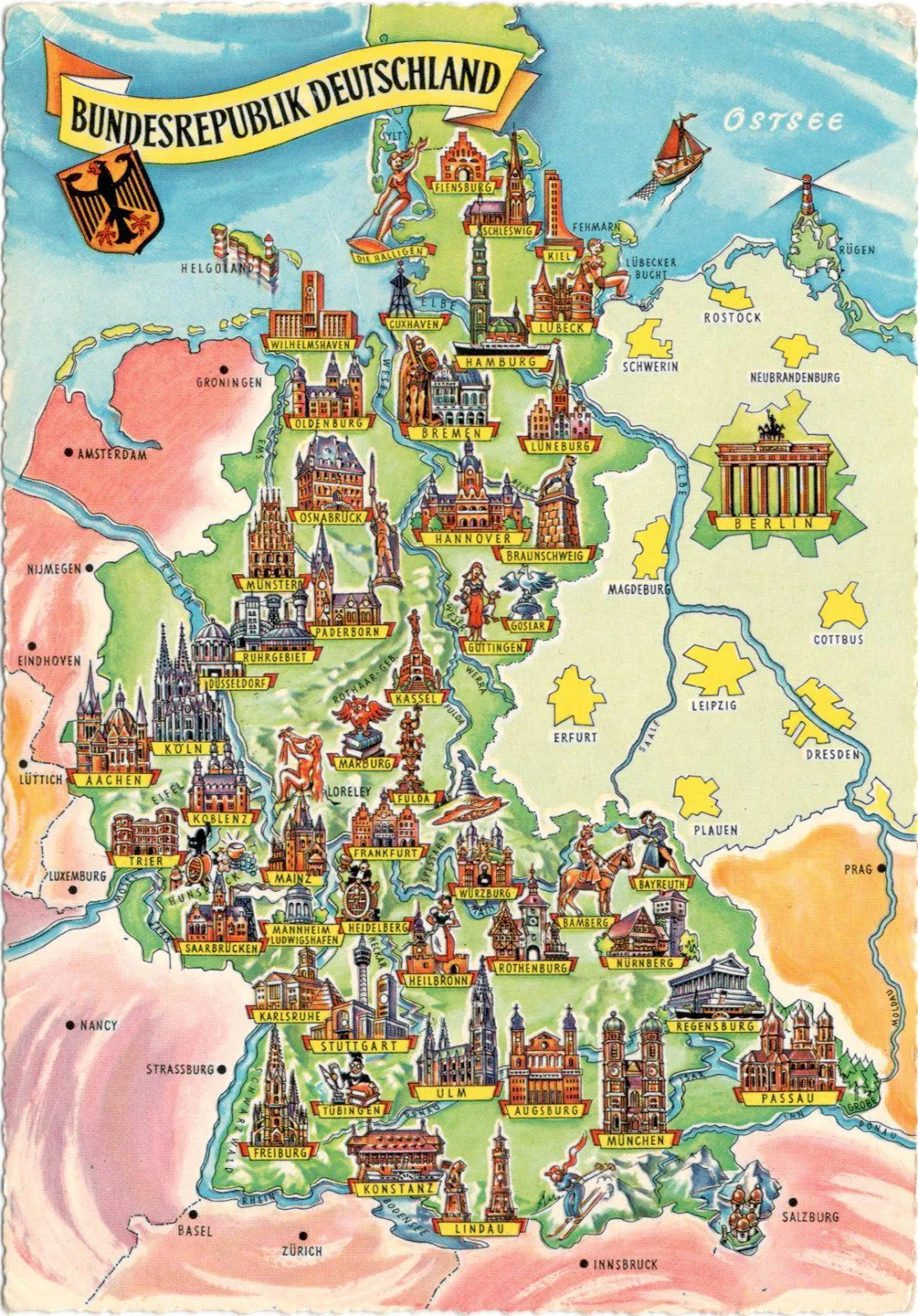 Photo: West Germany, via 1.bp.blogspot.com
For American kids especially, writing to someone in another country was one of the only ways to access a world beyond their immediate zip code. There was no Google Street View to look up their neighborhood, no Instagram to scroll through their life before you'd even said hello. You learned about them only through what they chose to share, one letter at a time.
The Patience That Made It Real
Here's the part that's genuinely hard to explain to anyone under thirty: the waiting was part of the point.
You wrote a letter. You mailed it. Then you waited two weeks, sometimes three, for a reply to cross an ocean. During that time, you thought about what you'd written. You wondered what they'd think of the part about your dog, or your town, or the baseball game you went to. When the reply finally arrived — in a thin airmail envelope with exotic stamps in the corner — it felt like something. Not a notification. Not a ping. Something.
That gap between sending and receiving forced a kind of intentionality that instant communication simply doesn't require. You couldn't fire off a half-formed thought and correct it thirty seconds later. You chose your words. You described your world carefully, because the person reading had no other way to picture it. And because both parties were investing real time and effort, the relationship tended to be treated with corresponding seriousness.
Many pen pal friendships lasted years. Decades, in some cases. There are documented examples of Americans and their overseas pen pals finally meeting in person after twenty or thirty years of correspondence — and finding that they knew each other better than most people they'd spent time with in the same room.
What the Letters Actually Contained
If you've never read a pen pal letter from the 1950s or 60s, the content might surprise you. These weren't just polite exchanges about the weather. People wrote about their families, their fears, their ambitions, the texture of daily life in their town. An American teenager writing to someone in postwar Germany might describe her school cafeteria in careful detail, knowing her correspondent had no frame of reference for it. In return, she'd receive descriptions of a world she'd only seen in newsreels.
The letters were, in effect, a form of mutual journalism. Each person was both reporter and audience. And because the correspondence was private — not broadcast to a feed, not visible to anyone else — people shared things they might never have said publicly. The anonymity of distance, paradoxically, created intimacy.
What Replaced It — and What Didn't
Social media promised to do all of this faster and better. In some ways, it delivered. You can now connect with people on every continent before lunch. You can see their faces, their cities, their daily lives in real time. The friction that once defined long-distance connection has been almost entirely removed.
But friction, it turns out, was doing some important work.
The effortlessness of modern connection means that most of it is shallow. You follow someone. They follow back. You like each other's posts for a while, and then the algorithm shifts and you drift apart without ever noticing. There's no equivalent of the letter you kept in your nightstand drawer because you'd read it so many times the ink was starting to fade.
The pen pal era produced something that today's connection economy struggles to replicate: relationships built on nothing but words and time. No profile photos, no mutual friends, no shared location data. Just what you chose to say about yourself, and the patience to wait for a reply.
The Thing Worth Remembering
There's something almost radical about the pen pal model when you hold it up against the present. In an era when attention is the scarcest resource and every platform is engineered to capture more of it, the idea of spending thirty minutes composing a letter to someone you've never met — and then waiting three weeks for a response — sounds like science fiction.
But millions of ordinary Americans did exactly that, and many of them would tell you it produced some of the most meaningful relationships of their lives.
The stamp that started those friendships didn't cost much. What it bought, in retrospect, was something we're still trying to figure out how to get back.