The Public Pool Was Free, the Lemonade Was a Quarter, and Summer Belonged to Everyone
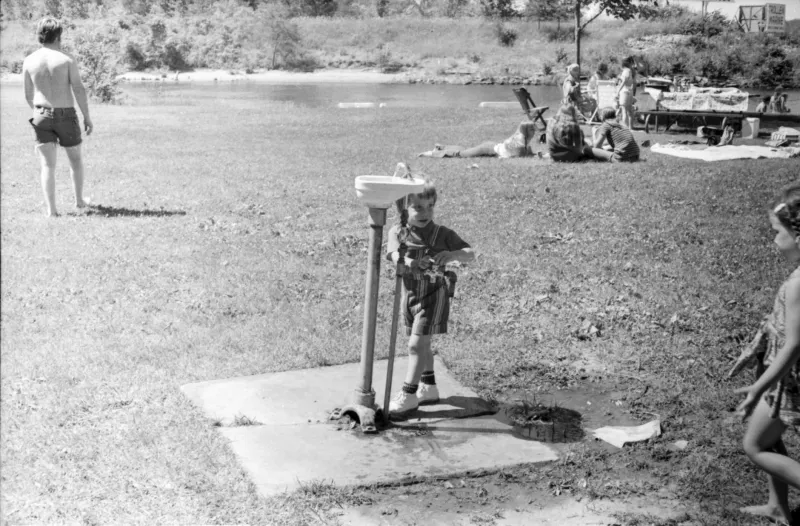
Somewhere around the second week of June, the school year ended and something else began. You grabbed a towel, maybe a dollar for a Popsicle, and walked. Just walked — down the block, across the park, through the gap in the chain-link fence — until you hit the public pool. It smelled like chlorine and sunscreen and the particular brand of chaos that only exists when two hundred kids are left to their own devices in shallow water.
Admission was a dime. Or a quarter. Or free, depending on the city and the decade. The point is it was nothing. It was summer, and summer was for everyone.
That version of July is harder to find now.
The Infrastructure That Used to Be There
At its postwar peak, America had an extraordinary network of public leisure infrastructure. Municipal pools operated in nearly every mid-sized city and most small towns. State and county parks maintained swimming holes, picnic areas, and open fields that families could access for nothing more than the drive to get there. Urban neighborhoods had park sprinklers — those iron mushroom-shaped fixtures that erupted in the heat — that served as improvised water parks for kids who didn't need anything fancier.
The New Deal had built much of this. Between 1933 and 1943, the Works Progress Administration constructed over 750 public pools across the country, along with thousands of parks, recreational facilities, and community gathering spaces. The idea behind it was explicit: leisure should not be a luxury. Public recreation was infrastructure, the same as roads and bridges, and it belonged to everyone who paid taxes into the system.
 Photo: Works Progress Administration, via i.etsystatic.com
For a few decades, it worked that way. Working-class families in Pittsburgh and Memphis and Sacramento sent their kids to the pool the same way families in nicer neighborhoods did. The water didn't know the difference.
What Changed — and When
The unraveling happened gradually, across several decades, and through a combination of forces that rarely get discussed together.
First came the legal battles. Following the desegregation of public facilities in the 1950s and 1960s, a significant number of municipalities chose to close their public pools rather than integrate them. It was one of the quieter chapters of that era — pools didn't make the history books the way lunch counters did — but the effect was real. Hundreds of public facilities shut down in the South and parts of the North. Many never reopened.
Then came the budget cuts. The tax revolts of the late 1970s — California's Proposition 13 being the most famous — triggered a long retreat from public spending on leisure. Cities that had maintained free pools began charging admission. Parks that had been staffed with lifeguards and recreation directors were left to run themselves. The infrastructure aged, and the money to maintain it didn't materialize.
By the 1980s and 1990s, the private alternative had arrived to fill the gap — and it came with a waitlist.
The Country Club Went Suburban
The country club used to be a fairly specific institution: expensive, exclusive, and clearly not for everyone. Most Americans understood they weren't members and didn't lose sleep over it.
What happened over the last thirty years is subtler and more pervasive. The amenities that country clubs once offered — pools, tennis courts, organized summer programs for kids — migrated into subdivision HOAs, private swim clubs, and YMCA memberships that, while not extravagant, still carry a price tag that excludes a meaningful portion of the population.
A family membership at a private swim club in the suburbs now runs anywhere from $800 to $3,000 a summer depending on the region. YMCA family memberships average around $80 a month nationally. Even public pools, where they still exist, often charge daily admission fees of $5 to $12 per person — enough to make a spontaneous Tuesday afternoon swim a calculated expense rather than an impulse.
For families living paycheck to paycheck, those numbers add up to a simple conclusion: summer recreation is something other people do.
The Heat Doesn't Check Your Membership Card
There's a public health dimension to this that doesn't get enough attention. Swimming ability — or the lack of it — tracks closely with income and race in America, and researchers have documented the gap for decades. The CDC estimates that drowning rates among Black children between ages 10 and 14 are roughly three times higher than among white children of the same age. Reduced access to public pools and swimming instruction is a significant factor.
The communities that lost their public pools in the 1960s and never got them back are still living with the consequences. Access to swimming isn't just about summer fun. It's a safety skill, and it was quietly rationed along economic lines.
What the Swimming Hole Actually Was
Before the municipal pool, there was the swimming hole — a bend in the creek, a quarry lake, a river stretch that everyone in a five-mile radius knew about and nobody owned. It was genuinely free in the way that only unmanaged nature can be. You showed up, you swam, you dried off on a flat rock. No admission, no wristband, no reservation system.
Most of those places still exist geographically. But liability concerns, private land ownership, and the general legalization of everything that used to just be understood have made them inaccessible in practice. The creek is still there. The sign says No Trespassing.
Somewhere between the swimming hole and the swim club membership, summer stopped being the great American equalizer. It became something you opted into — if you could afford the fee.